Nature Communications has published an innovative study entitled "Photoreceptor metabolic window unveils eye–body interactions", which links plasma nuclear magnetic resonance (NMR) metabolomics with optical coherence tomography (OCT) to reveal the association between retinal photoreceptor layer thickness and the risk of multi-system diseases throughout the body, together with its metabolic basis. Adopting an innovative "international discovery – domestic validation" model, the study stands as a model of collaborative innovation in multinational cohort research.

|Background|
The eye has long been celebrated as the "window to the soul," but its value now reaches far beyond that philosophical metaphor: it has become a "biological window" into the health of the whole body. Recent studies show that the retina is significantly associated with multiple organ systems — heart, brain, kidney and lung — and is involved in metabolic regulation and the aging process. As the core functional unit of the retina, photoreceptors — the specialized neurons that convert light signals into nerve impulses — are being redefined as biomarkers of systemic health because of their extremely high metabolic activity. As non-invasive imaging becomes widespread in primary care, retinal assessment is expected to emerge as a new surrogate approach for whole-body health screening.
|Methods|
► Cohorts and data
UK Biobank (UKB): 121,837 participants, divided into three sub-cohorts (I–III) used respectively for association analysis, metabolomic modelling and validation.
Guangzhou Diabetic Eye Study (GDES): 2,975 Chinese patients with diabetes, used for cross-ethnic validation.
► Retinal assessment
Photoreceptor layer thickness was measured by OCT and divided into three subregions: central, inner ring and outer ring.
UKB used the Topcon 3D OCT-1000 Mk II, while GDES used the higher-resolution DRI OCT Triton.
► Metabolomic analysis
Plasma metabolites were measured by NMR: UKB used a 500 MHz Bruker AVANCE III HD NMR system, and GDES a higher-resolution 600 MHz Bruker AVANCE III HD NMR system.
Linear regression was used to analyse the association between metabolites and photoreceptor layer thickness, and Cox models were used to assess the relationship between metabolites and disease risk.
► PMW model development
A Transformer neural network was used to integrate metabolomic data and predict 16 systemic health outcomes.
Shapley values were used to interpret the contribution of model features, and model performance was validated in both UKB and GDES.
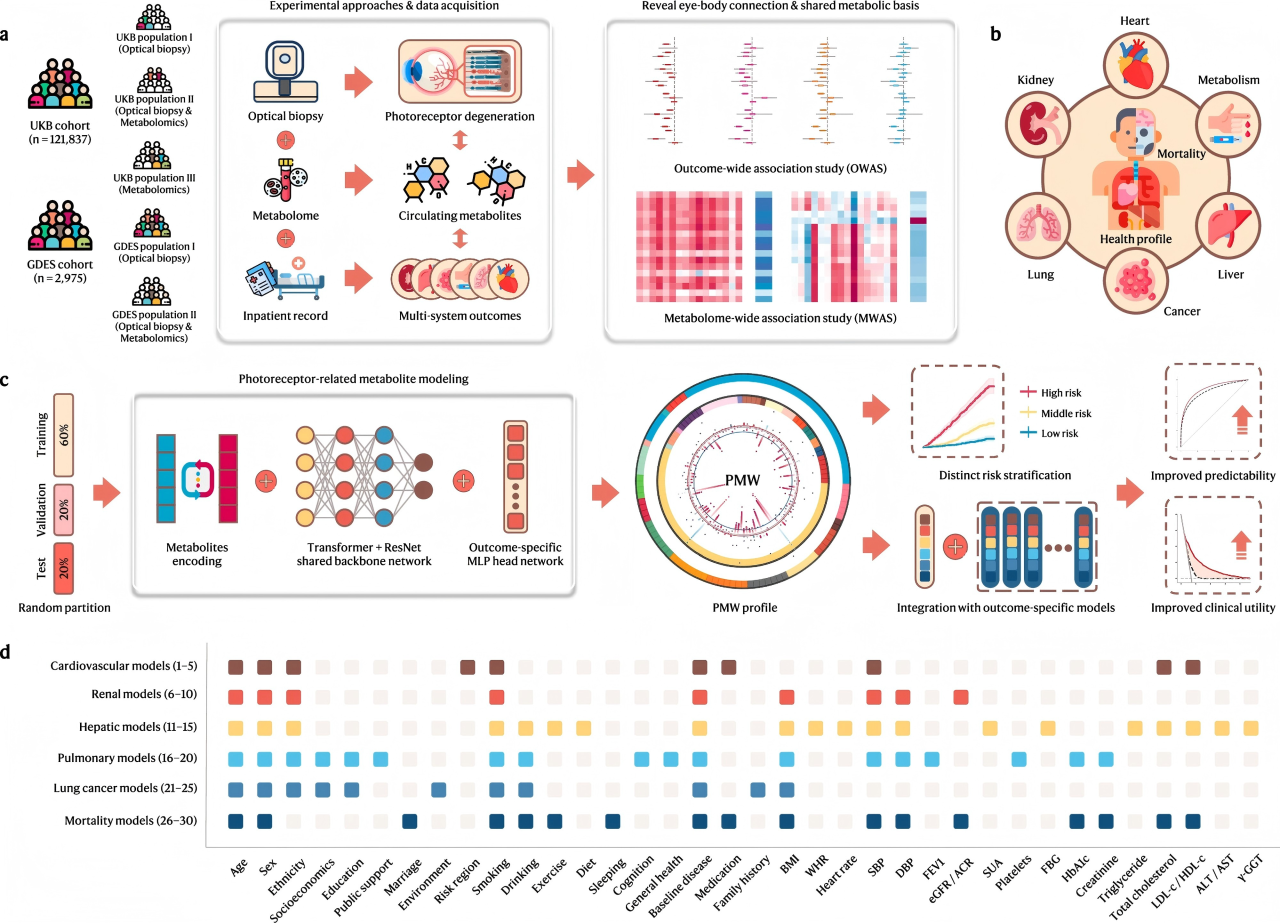
Experimental design
|Results|
In UKB sub-cohort I (27,999 participants, with a cumulative follow-up of 302,800 person-years), thinning of the photoreceptor layer was significantly associated with the risk of 13 diseases, including all-cause mortality (HR = 1.106), lung cancer (HR = 1.276) and end-stage renal disease (HR = 1.253). Notably, thickness changes in different retinal subregions (central, inner ring and outer ring) showed disease-specific association patterns; for example, central thickness was more strongly correlated with diabetes risk.
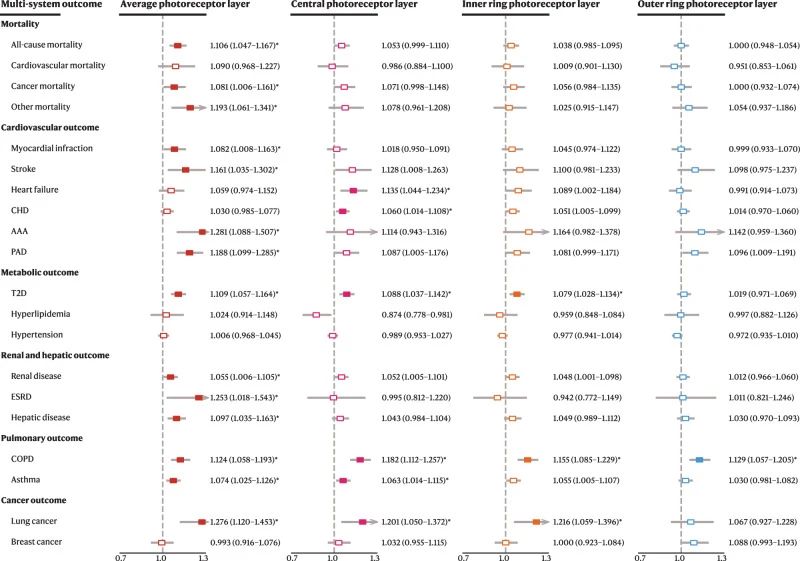
Association between OCT measurements in the UKB cohort and the incidence of multiple diseases
Using data from UKB sub-cohort II (7,824 participants) and sub-cohort III (86,014 participants), the analysis identified 109 metabolites associated with both photoreceptor layer thickness and disease risk, of which 72 were associated with mean thickness. The metabolomic analysis revealed key metabolic regulatory patterns: metabolites such as triglycerides and phosphatidylcholine were negatively associated with cardiovascular disease risk, whereas metabolites such as creatinine were positively associated with multi-system disease risk. These findings provide a potential metabolic mechanistic explanation for the link between retinal thickness and systemic disease.
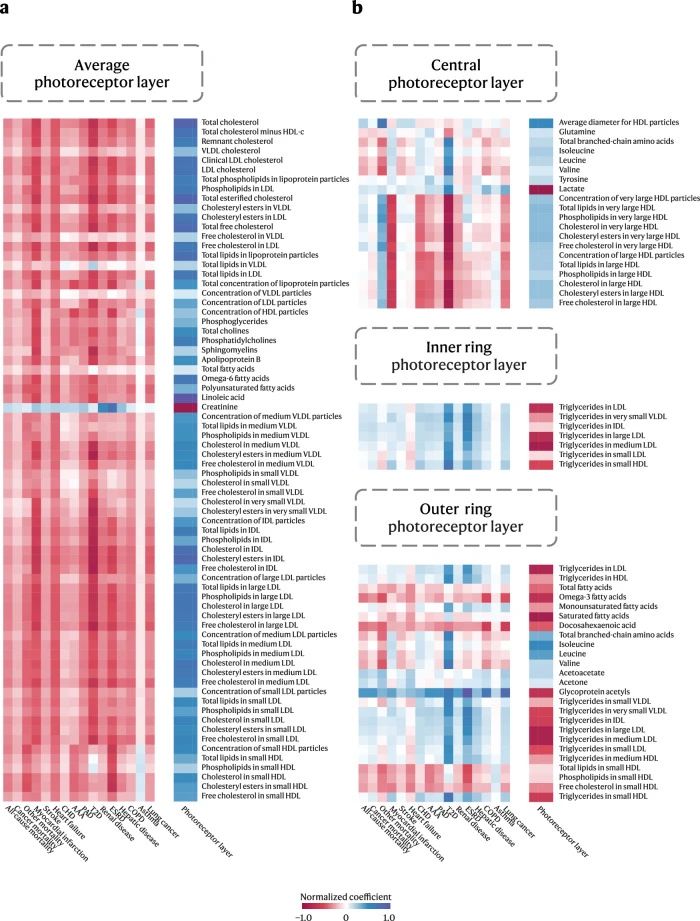
Association between metabolites in the UKB cohort and both disease and photoreceptor layer thickness
By integrating retinal imaging, metabolomics and artificial intelligence models, the team built the "photoreceptor metabolic window (PMW)" framework for systemic health risk assessment. In UKB, the framework significantly improved the prediction of multiple diseases: PMW significantly enhanced prediction for 14 of the 16 photoreceptor-related diseases, while showing no clear improvement for diseases with low predictive value (such as asthma) or with already very high baseline predictive performance (such as abdominal aortic aneurysm, AAA). In the independent GDES cohort, PMW was likewise significantly associated with the risk of several photoreceptor-related diseases, for example diabetic retinopathy (HR = 1.510), further confirming the consistency of the metabolism–disease associations identified in UKB.
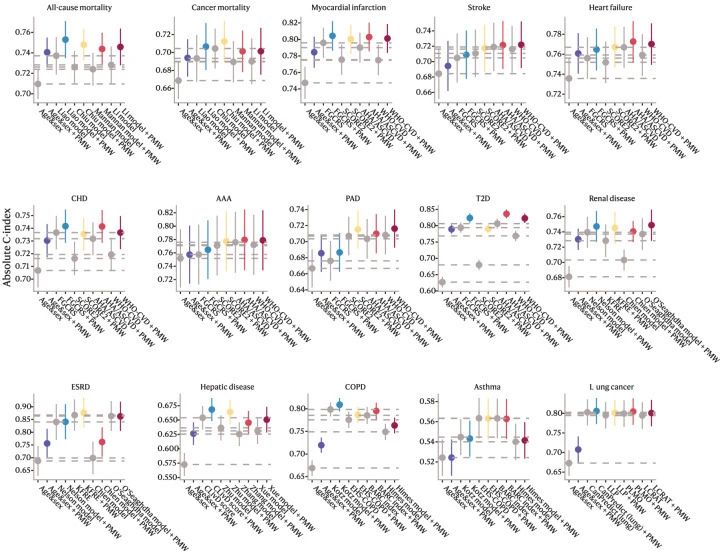
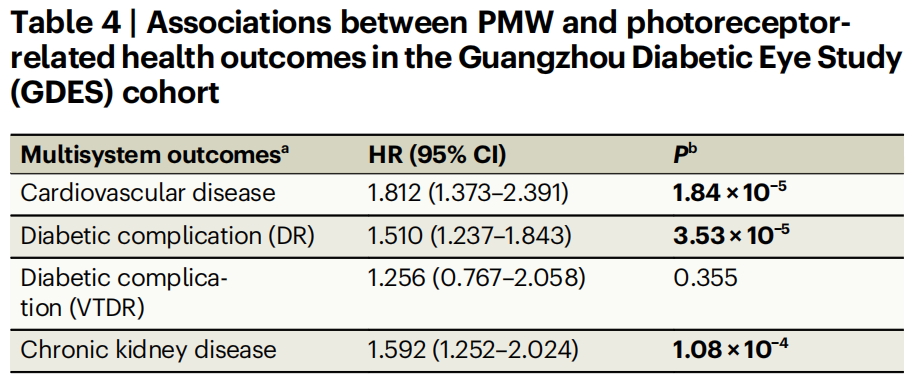
The value of PMW in predicting the risk of photoreceptor-related diseases
|Conclusions|
This study innovatively reveals the close association between retinal photoreceptor layer thickness and the risk of multi-system diseases throughout the body, together with the metabolic mechanisms that regulate it. By integrating multi-omics data with artificial intelligence modelling, it systematically demonstrates the unique value of the retina as a "window for monitoring whole-body health," providing strong evidence for the theory of "eye–body interactions." The study not only establishes an innovative research methodology, but also opens up a new strategy of non-invasive whole-body health assessment based on ophthalmic imaging, offering an important scientific basis for the early screening and prevention of chronic diseases. Future research will continue to break new ground along two dimensions: deeper analysis of molecular mechanisms and the translation of the technology into practice.
Precision NMR Blood Lipid Testing Service
ProteinT has signed a long-term exclusive agency agreement with Bruker, a leader in high-performance magnetic resonance instrumentation, to bring precision NMR blood lipid testing to China. Building on its stable performance advantages, the company has established a fully automated standard platform that offers simple sample preparation, automatic data acquisition and processing, and automatic quantitative reporting — with no need for prior NMR expertise.