
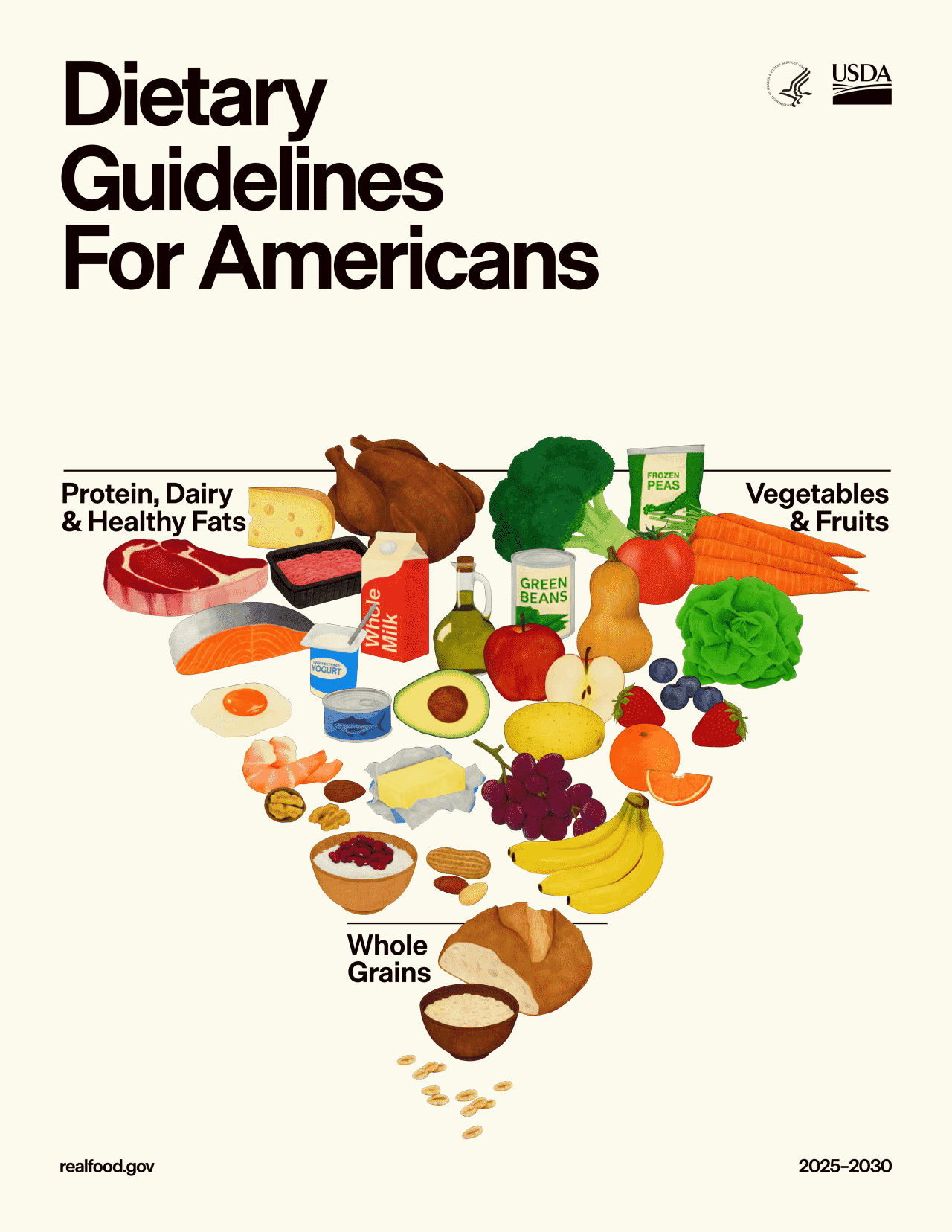
In the newly released Dietary Guidelines for Americans, 2025–2030, the U.S. Department of Health and Human Services (HHS) and the Department of Agriculture (USDA) opened with a rare statement that is strikingly direct — and even self-reflective:
“Eat real food.”
This is not a slogan; it is the most decisive shift in direction that U.S. federal nutrition policy has made in decades.
01 Why Is the United States “Overturning” Its Own Dietary Logic?
The picture painted by the authorities amounts to almost a systematic review of the country’s own food system.
● Nearly 90% of healthcare spending goes toward chronic disease
● More than 70% of adults are overweight or obese
● Nearly one-third of adolescents are in a prediabetic state
● Cardiovascular disease and metabolic syndrome continue to affect people at younger ages
These figures point to one conclusion: this is no longer a problem of “poor individual self-control,” but the outcome of long-standing dietary patterns and a food system design that has failed.
And that is exactly why this edition of the guidelines is not a patch-up job within the old framework — it resets the underlying logic of dietary advice.
02 Five Disruptive Changes: Understanding the Logic Behind the New Guidelines
If this shift had to be summed up in one sentence, it would be this:
No longer just counting nutrients and calories — now it is about what you actually eat.
 Highly Processed Foods Named “Public Enemy Number One”
In past editions of the Dietary Guidelines for Americans, highly processed foods were generally placed in the “fine in moderation” category, with the emphasis placed more on controlling fat, sugar and total calories.
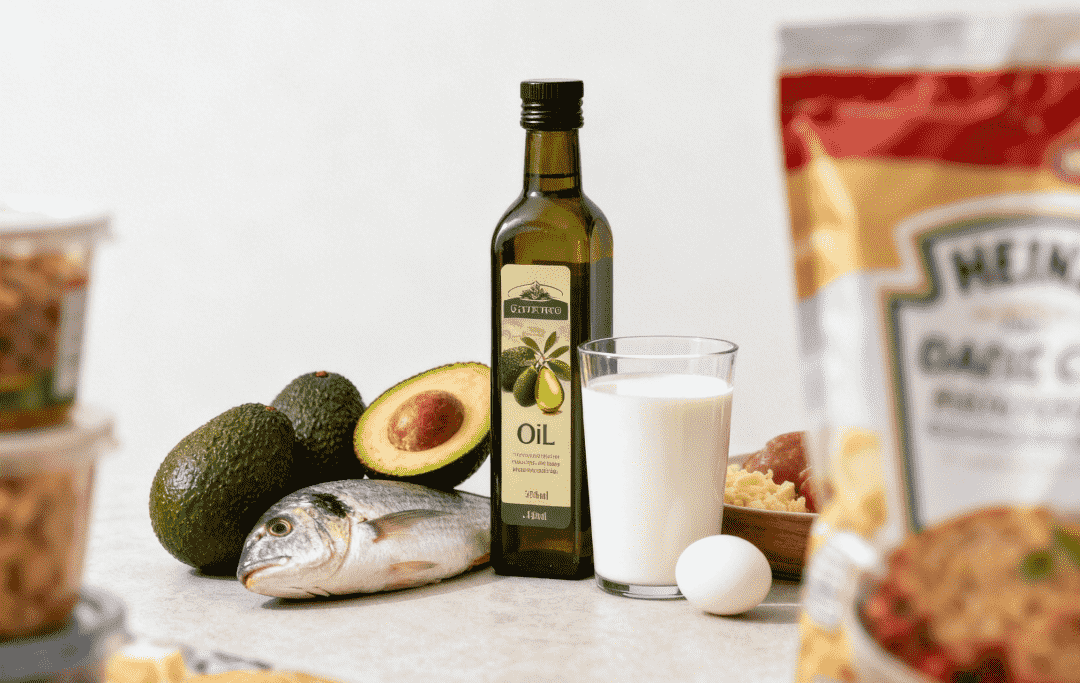
In the 2025–2030 edition, highly processed foods are, for the first time, explicitly defined as something to avoid as much as possible, with the public urged to stay away from packaged foods with long ingredient lists containing multiple additives, industrial oils and refined sugars. By contrast, “real food” is defined as natural ingredients with simple, recognizable components and high nutrient density.
This change marks a shift in the yardstick of healthy eating — from “how much you eat” to “what you eat.”
 Protein Takes Center Stage: From “Optional” to the Core of Every Meal
The new guidelines state clearly that every meal should prioritize the intake of high-quality protein, and raise the recommended daily protein intake for adults from the previous level of about 0.8 g/kg/day to 1.2–1.6 g/kg/day.
More importantly, they no longer take sides on where protein comes from. Plant proteins (legumes, nuts, seeds) and animal proteins (meat, eggs, dairy) are both brought into the recommended framework, with the emphasis placed not on ideology but on nutrient density and the balance of the overall dietary pattern.
This draws a very clear line against the old thinking of “staples first, protein in moderation.”
 Fats Reassessed: Natural Sources Vindicated
This is probably the change most open to misinterpretation — and also the most consequential.
The new guidelines no longer treat “low fat” as the central goal of healthy eating. Instead, they state clearly:
Healthy fats are part of the essential nutrient picture, and full-fat dairy and natural fat sources can be included in a healthy dietary pattern.
At the same time, the guidelines still emphasize limiting total saturated fat intake — but the emphasis has clearly shifted —
what really needs to be restricted is fat from highly processed foods, not the fat naturally present in food itself.
In other words, the problem is not fat itself, but where the fat comes from and how it has been processed.
 A Full-Scale Campaign Against Added Sugars, With Unprecedentedly Strict Standards
Compared with the previous wording that “added sugars should not exceed 10% of total calories,” the new guidelines take a markedly firmer stance.
The guidelines state: no amount of added sugar is recommended as part of a healthy diet. No more than 10 grams per meal is simply an upper limit for risk control, not a target to approach. At the same time, non-nutritive sweeteners are, for the first time, explicitly excluded from the toolkit of healthy eating.
 Carbohydrates Step Back: Emphasis on “Quality” Rather Than “Quantity”
In the new guidelines, grains occupy a relatively more restrained position in the dietary pattern. The guidelines recommend 2–4 servings of whole grains per day, while markedly reducing the share of refined carbohydrates such as white bread, cookies and sweetened breakfast cereals.
The core idea is not to “reject carbohydrates,” but to emphasize choosing carbohydrate sources of higher quality, higher fiber and lower processing.
03 What Do These Changes Mean for the Way We Eat?
Many people instinctively think: “This is an American problem; it has little to do with us.” The reality, however, is that the chronic disease profile in China is converging on the “American model” at remarkable speed. Staple foods are becoming ever more refined, intake of hidden sugars and hidden oils is rising, processed foods and takeout make up a growing share of the diet, and protein intake is structurally unbalanced. These problems are already very common.
One very typical phenomenon is: people eat plenty, but the nutrient density of what they eat is low. This is precisely the core problem the new U.S. guidelines are trying to correct.
04 The Era of Precision Nutrition: You Need a Personalized Dietary Guide
Whether it is the disruptive recommendations of the U.S. guidelines or the more balanced approach of the Chinese guidelines, both point to one core trend: population-level dietary advice is moving toward individualized nutrition decisions. The reason is not complicated. Everyone differs substantially in metabolic state, gut environment and lifestyle, and the response to the same dietary pattern can be completely different.
Want to know how these broad dietary principles translate precisely into your three meals a day? What you need is no longer generic advice, but precise insight built on your own data.
 MiMi™ | Precision Dietary and Nutrition Control
Through the analysis of metabolites in urine, it helps you see more individualized information:
● Whether your current dietary pattern is truly being absorbed and used by your body
● Whether the metabolism of protein, fat and carbohydrates is in relative balance
● Which seemingly “healthy” eating habits are quietly dragging down your metabolic efficiency
It does not tell you which dietary trend to follow. Rather, it helps you pin down the key links that need adjusting, turning “eat real food” from an idea into a quantifiable, verifiable action.
The greatest value of this “reset” of the U.S. Dietary Guidelines does not lie in handing out a new recipe. It lies in the reminder that in a highly industrialized food environment, returning to real food matters far more than counting calories. But in the end, the nutrition plan that suits you best is always built on understanding your own body.
In an age of information overload, true health begins with clear self-knowledge. Start with a scientific test, map out your own nutritional and metabolic profile, and make every bite a more rational choice.