
On 22 October, research teams from Beijing Fuwai Hospital, Southern Medical University and Ruijin Hospital, Shanghai Jiao Tong University School of Medicine published their latest findings in the international journal Biomarker Research (IF = 11.5), under the title "Proteomic and histopathologic profiling reveal molecular features and clinical biomarkers of coronary atherosclerosis". By integrating coronary artery tissue proteomics with plasma proteomics, the study systematically mapped the molecular landscape of atherosclerosis and successfully screened out novel blood biomarkers with diagnostic potential.
ProteinT was honoured to provide the plasma proteomics testing service for this study, supporting the scientific breakthrough.
● Background: early diagnosis of coronary heart disease is urgently needed
Coronary atherosclerotic heart disease (CAD) is the leading cause of cardiovascular death worldwide. Clinical diagnosis today relies mainly on symptoms, imaging and a small number of conventional biomarkers, and the ability to recognise early plaque formation and unstable states remains limited. Finding blood biomarkers that reflect the occurrence and progression of plaque is therefore key to early warning and risk stratification in coronary heart disease.
● Research highlights: proteomics reveals plaque progression
Core pathways and plasma biomarkers
01 Tissue proteomics + single-cell transcriptomics: revealing the core pathways of disease progression
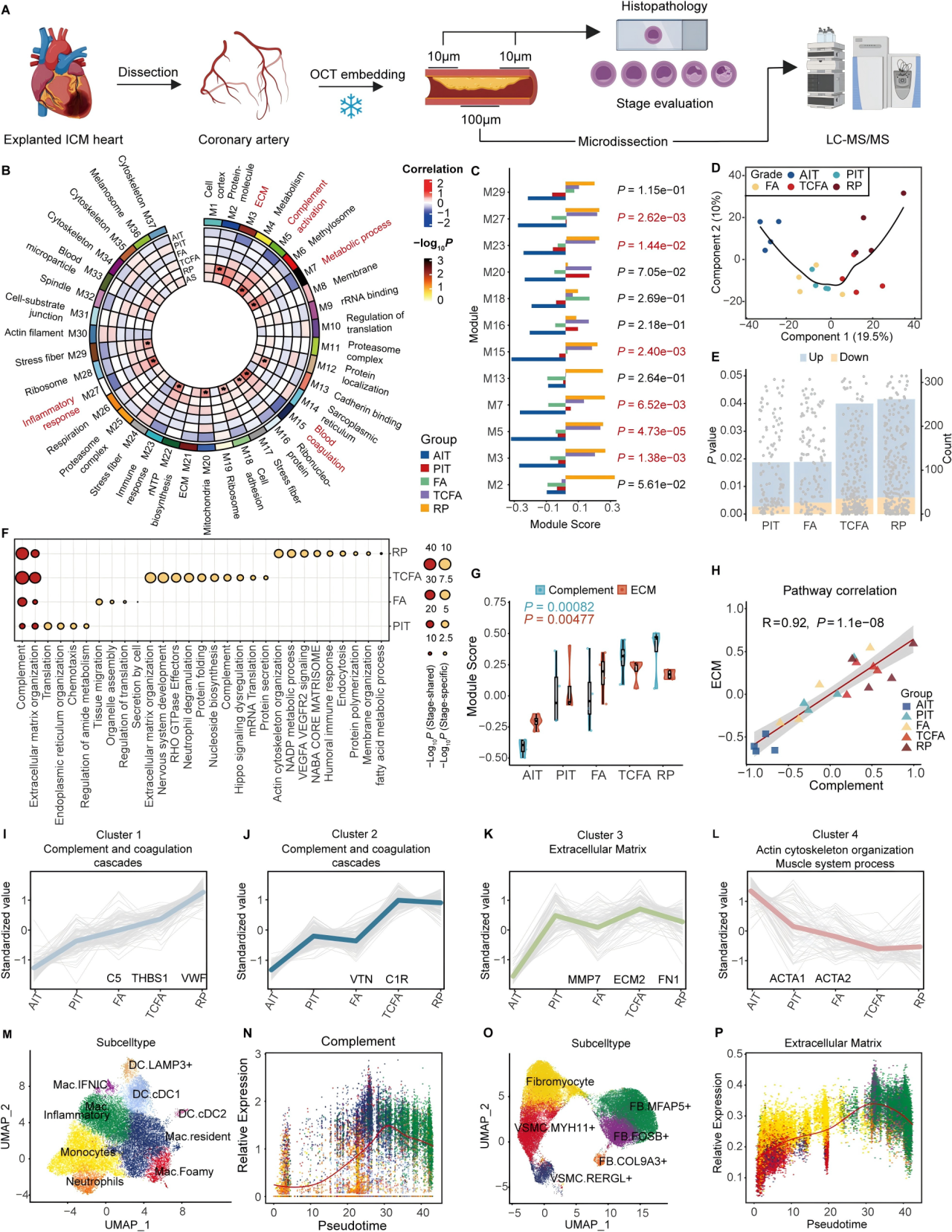
▶ The research team performed LC-MS/MS proteomic analysis on 20 coronary artery segments from 4 patients with ischaemic cardiomyopathy and found thatthe complement/coagulation cascade and extracellular matrix (ECM) organisationare the two core pathways that remain persistently dysregulated as the disease progresses.
▶ Combined with single-cell RNA sequencing data for further localisation, these key proteins were traced mainly tofibroblasts, macrophages and smooth muscle cells,clarifying their cellular origin in plaque evolution.
02 Plasma proteomics + ELISA validation: discovery and validation of a diagnostic biomarker panel
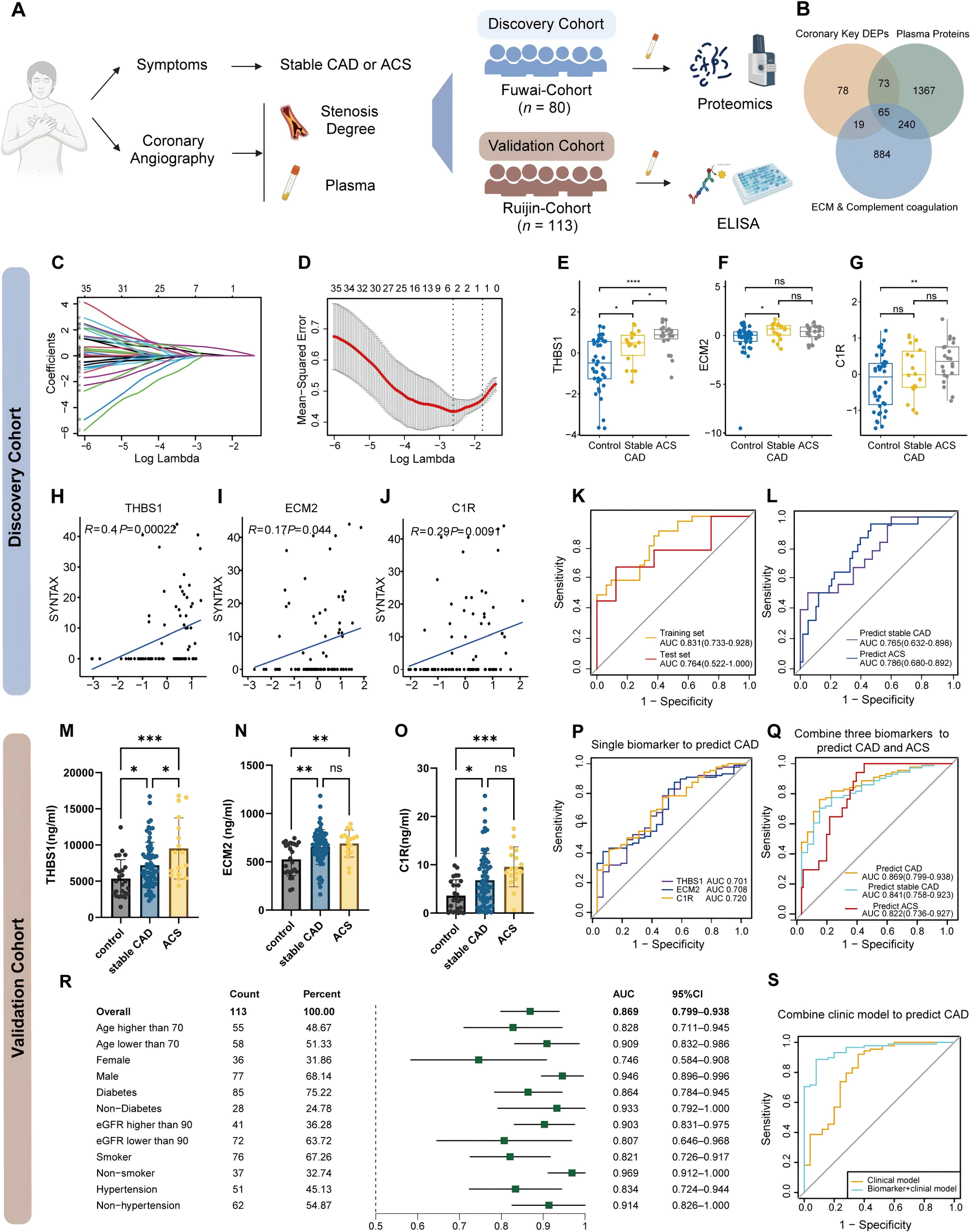
▶ In a discovery cohort of 80 patients with angina pectoris, the team performed high-depth plasma proteomic profiling(this part was provided by ProteinT), focusing on complement and ECM-related proteins that changed significantly in both tissue and plasma.
▶ Using machine learning algorithms such as LASSO regression, the team selectedTHBS1, ECM2 and C1Ras three key proteins and built a three-marker diagnostic model.
▶ This biomarker panel showed excellent diagnostic performance in the discovery cohort: the AUC for distinguishing coronary heart disease patients from controls reached 0.831 (training set) and 0.764 (test set), and it could also effectively distinguish stable coronary heart disease from acute coronary syndrome (ACS).
03 Successful external independent validation: robust diagnostic performance of the panel
▶ In another independent validation cohort of 113 subjects, THBS1, ECM2 and C1R were measured by ELISA, confirming that the plasma levels of all three were significantly elevated in patients with coronary heart disease and with ACS.
▶ The three-marker panel remained stable in the validation cohort, achieving an AUC as high as 0.869 for diagnosing coronary heart disease and showing strong potential for clinical translation.
● Research value: translation from mechanism to clinic
a model for medicine
This study presents in full the classic translational research pathway of "tissue mechanism exploration → plasma biomarker screening → independent cohort validation", highlighting the pivotal role of proteomics in the discovery of disease biomarkers:
● Surpassing conventional biomarkers:the diagnostic performance of THBS1 and C1R is superior to that of the widely used high-sensitivity C-reactive protein (hs-CRP).
● Improving the composite diagnostic model:combining this three-marker panel with routine clinical indicators such as age and blood lipids can significantly raise the diagnostic accuracy for coronary heart disease.
ProteinT: your one-stop proteomics solution
from discovery to validation
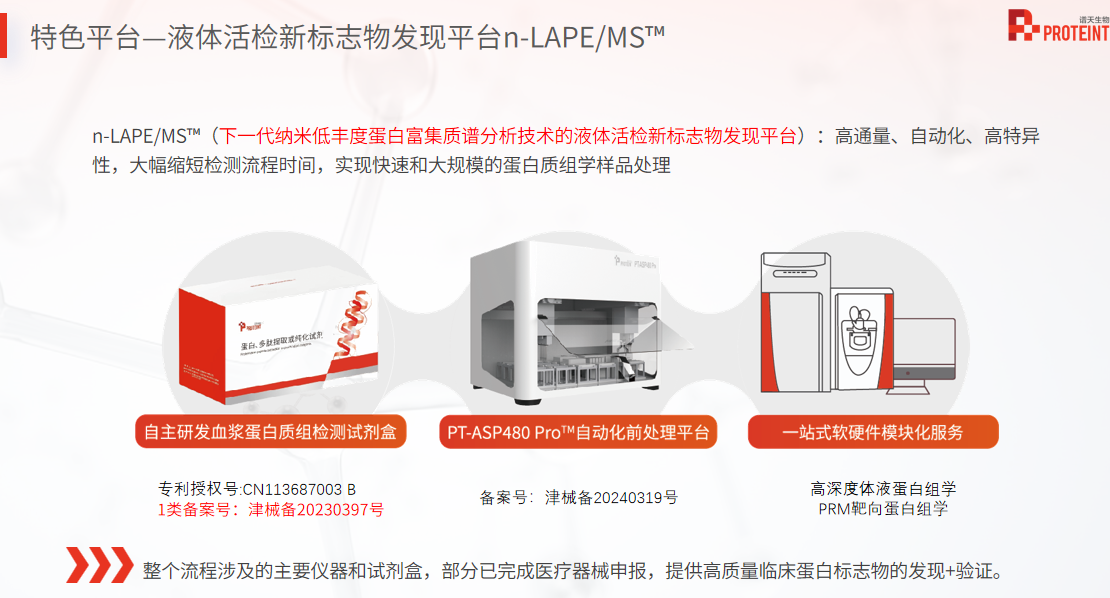
The success of this study would not have been possible without the support of high-quality plasma proteomics data. ProteinT focuses on innovation and application in proteomics technology services, and is committed to providing reliable support for clinical translational research:
1 High-depth coverage:
providing whole blood/plasma/serum proteomics testing, mining low-abundance proteins in depth to support efficient biomarker discovery.
2 Targeted validation support:
offering targeted proteomics validation services such as PRM/MRM for absolute quantification of candidate biomarkers and large-sample clinical validation.
3 End-to-end support:
from early discovery to late-stage validation, ProteinT provides one-stop technical support to accelerate the implementation of precision medicine research.
Advancing science, serving health. ProteinT explores the infinite possibilities of lifeomics together with you.
