
Today is World Strengthened Immunity Day (World Strengthened Immunity Day).
Over the past few years, one thing has become increasingly clear to us:
What truly separates people in terms of health is often not whether they have had a major illness, but whether the immune system remains in a stable, responsive state over the long term.

Immunity Is About Much More Than "Not FallingSick"
When people hear the word immunity, most think of: do I catch fewer colds? Am I prone to infection?
But in medical and life science research, the role of the immune system goes far beyond this. A large body of research shows that it is involved in virtually every key process in the body:
● Infection defense:fending off external threats such as viruses and bacteria
● Chronic disease regulation:closely linked to hypertension, diabetes and cardiovascular disease
● Tumour surveillance:identifying and clearing abnormal cells
● Aging process:immune imbalance is a key mechanism of "inflammaging"
● Mood and sleep:immune signals can influence the nervous system and circadian rhythms
Compared with a single acute infection, a long-term, low-grade imbalance of the immune system tends to have a far deeper impact on health.
"Looking Fine" on the Outside, While Immunity Has Already Declined?
Many people have normal check-up results, yet often feel tired, catch colds easily, sleep lightly and recover slowly; some even suffer recurring inflammation and slow wound healing, with chronic disease indicators hovering at the borderline.
According to WHO data, around 75% of people worldwide are in a sub-health state, and immune imbalance is one of the core factors behind it.
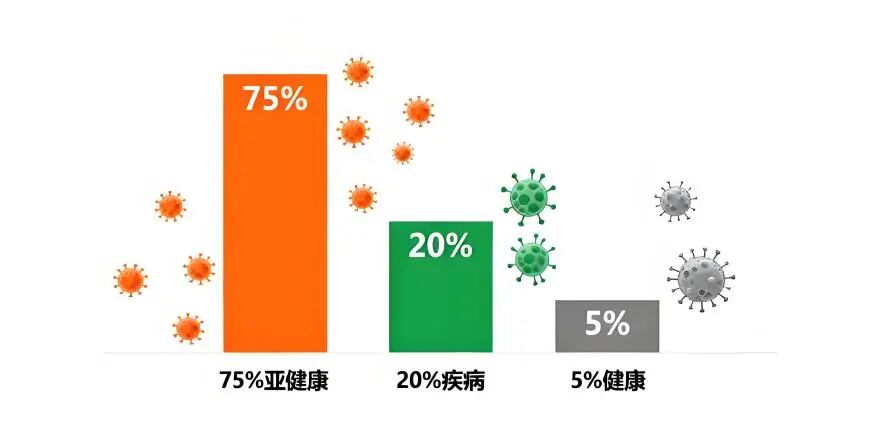
Immunity is not simply "strong or weak by nature"; it is shaped by metabolism and lifestyle. The main factors include:
● Nutritional and metabolic imbalance:
insufficient protein, amino acids, vitamins or trace elements, compromising immune cell function
● Chronic stress and sleep deprivation:
chronically elevated cortisol suppresses immune responses
● Low-grade chronic inflammation:
persistent mild inflammation is common in people with metabolic disorders
● Gut microbiota disturbance:
around 70% of immune cells are associated with the gut, and microbial imbalance affects defensive capacity
Metabolism: The "Underlying Operating Logic" of Immunity
In a healthy state, the immune system maintains a dynamic balance: it defends against external threats without attacking the body itself. Research shows that this balance depends heavily on the body's metabolic state — whether metabolism runs smoothly directly affects the strength and stability of the immune response.
● T cells: at rest they rely on oxidative phosphorylation for energy, and once activated they switch rapidly to glycolysis to support fast proliferation
● Macrophages: switching between the pro-inflammatory (M1) and anti-inflammatory/repair (M2) states is likewise accompanied by metabolic reprogramming
These metabolic shifts determine the intensity, direction and duration of the immune response.
▍ What this means:
▍ immune problems tend to show up first at the metabolic level, not at the symptom level.
Managing Immunity: The Key Is Not "Supplementing"
When people notice a problem with their immunity, their first reaction is often to reach for health supplements and vitamins, trying one "immunity-boosting" product after another.
But truly scientific immune management is not about "taking more supplements." It is about —
first finding out: at exactly which link is your immune system stuck?
This is precisely the reason precision health management exists.
MiMi™ | Seeing the True State of Your Immunity at the Metabolic Level
MiMi™ uses urine metabolomics testing to systematically assess immune-related status at the metabolic level. Building on nuclear magnetic resonance (NMR) spectroscopy, it systematically analyzes more than 270 metabolic indicators to identify immune-related metabolic abnormalities and potential risks. Around the immune system, MiMi™ provides further health management support, including:
✦ Assessing immune status:
distinguishing between states such as low immune function, dysregulation and abnormal activation
✦ Precision nutrition guidance:
providing personalized adjustment recommendations for immune-related nutritional shortfalls
✦ Inflammation and metabolism alerts:
flagging early trends in chronic inflammation and immune imbalance
✦ Gut-immune interaction analysis:
providing a reference for probiotic supplementation and dietary adjustment
✦ Chronic disease and tumour risk alerts:
delivering risk signals before any definite disease has appeared
Rather than simply answering "is your immunity strong or not," MiMi™ helps you see clearly: which link the problem lies in, and how to adjust scientifically from there.
Immunity is not a slogan; it is a complex system that needs to be seen, understood and managed over the long term.
On World Strengthened Immunity Day, the most important question is not "what should I take," but —do you truly understand your own immune status?
When changes in the immune system can be quantified, tracked and managed, health is no longer just a feeling.
The invisible ripples of metabolism are the prelude to the wave of immunity.