
Why do early-stage lung cancers that have been resected cleanly and staged clearly still carry a risk of recurrence? During those seemingly "safe" years after surgery, what exactly are the tumor cells quietly brewing?

The words "early-stage lung cancer" often give patients an almost certain sense of reassurance. The surgery succeeded, the margins were clean, the stage was clear — everything seems to be moving steadily in the direction of a cure.
Clinical reality, however, is different: even with the most strictly defined stage I non-small cell lung cancer, around 30% of patients experience recurrence within five years of surgery. The reason is not that the surgery "failed to remove everything," but that the complexity of tumor biology reaches beyond what the naked eye and imaging can see.

1The nature of recurrence: not "getting the disease again,"
but "the biological potential left behind"
● Retention of an invasive phenotype:
A very small number of surviving cells may still be capable of penetrating tissue and stimulating blood vessel growth● Metabolic reprogramming inertia:
The tumor-specific "Warburg effect" (relying mainly on glycolysis even when oxygen is present) may still be running, supplying energy for regrowth● Immune escape capability:
Some cells are able to suppress T-cell activity and remain "invisible" within the body's immune systemIn other words,Recurrence is not a "new cancer," but a continuation of the original tumor's biological characteristics. They are simply hiding deeper for the time being.
2"Seed" and "soil": recurrence needs two conditions to hold at once
● The "seed":
A tiny number of tumor cells that survive surgery and enter a dormant state● The "soil":
The postoperative tissue microenvironment, including inflammatory responses, cytokines and the state of angiogenesis3The truth about recurrence: when genes fall "silent," proteins are "crying out"
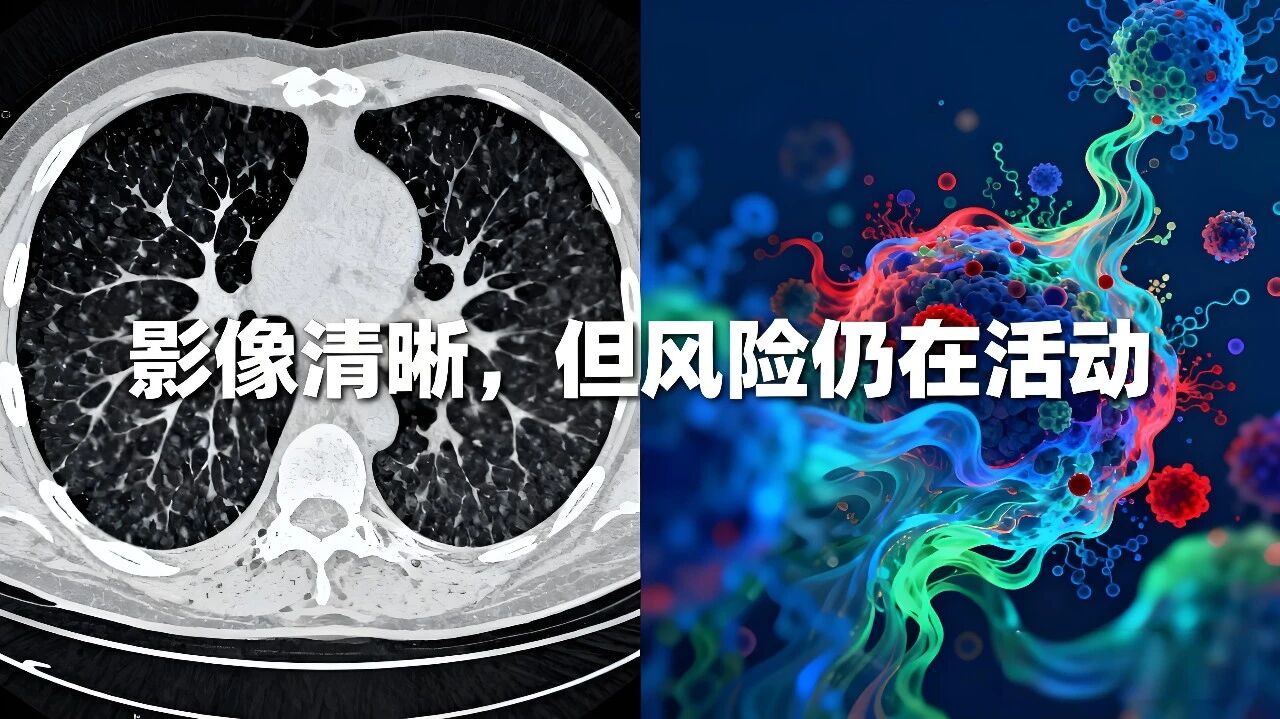
This revealsthat the core of recurrence risk often lies not in the genetic "blueprint," but at the protein "construction site":
● Signaling out of control:
Even a mild abnormality in upstream genetic signaling can leave downstream proteins over-activated, like a speaker turned up to maximum volume, driving cells to proliferate wildly.● Network rebellion:
Multiple normal physiological pathways are "rewired" by tumor cells through protein networks, forming a self-sufficient survival network — a dynamic change that static genetic testing cannot capture.
● Microenvironmental corrosion:
Tumor cells secrete specific proteins to "educate" their surroundings in real time, building a protective shield for themselves. This functional dialogue is the real battlefield that decides whether recurrence happens.
Recurrence in stage I lung cancer is therefore essentially a"rebellion" of protein function
. Whether that rebellion occurs, and how fierce it becomes, depends on protein activity and network state — precisely the "microscopic truth" that conventional methods struggle to reach.4Proteins: the "real-time commanders" of recurrence
▶ Overexpression of a protein involved in cell cycle regulation (such as Cyclin D1) acts like a permanently pressed accelerator, driving uncontrolled cell division even after surgery.
▶ Elevated activity of certain matrix metalloproteinases (MMPs) is like being fitted with sharper "scissors," helping tumor cells cut through tissue barriers and clear a path for invasion.
▶ High expression of immune checkpoint proteins (such as PD-L1) on the surface of tumor cells is like raising a "flag of truce," leaving immune cells unable to mount an effective attack.
5From "waiting" to "seeing it first"
No longer simply "regular check-ups and wait and see," but an attempt to assess the biological possibility of recurrence at the earliest stage.
● Risk level:
Is the patient in a high-risk zone or a low-risk zone?● Intervention window:
When and in what way should high-risk patients be intervened upon in advance?● Grounds for reassurance:
Why can low-risk patients appropriately reduce follow-up and avoid excessive medical care?