
Chronic diseases never appear "overnight."
Before indicators rise, imaging becomes abnormal and symptoms emerge—
the human body has already passed through a long and quiet "period of systemic drift."
Unfortunately, conventional testing can usually only capture "problems that have already occurred," and finds it hard to see "trends that are still forming."
What Elixir™ brings is not chronic disease management in the clinical sense, but one step earlier—
identifying systemic metabolic drift before chronic disease develops, and offering a new perspective for research and population studies.

Part.1 From "abnormal" to "drifting": the first half of the chronic disease story 
Conventional testing asks:
Is blood glucose high? Has blood pressure risen? Are blood lipids abnormal?
But these are all "results."
Before these indicators cross their thresholds, the body's systems have often already shown:
● A mild imbalance in lipid and amino acid metabolism
● Low-amplitude fluctuations in inflammation-related metabolites
● "Pressurized elevation" of certain metabolic pathways
● A redox state trending toward mild tension
● Metabolic flux beginning to move from the "center of the normal range" toward its edges
These changes are not equivalent to disease, but they may be the earliest signals that the system is moving toward a zone of metabolic stress.
The value of Elixir™ lies in:
allowing these trends to be observed earlier.

Part.2 This is not clinical chronic disease management, but "systemic drift research"
Elixir™ makes it possible to identify trend-level changes and hidden structures in living systems within research settings.
01 ▍ Cohort studies: identifying metabolism-related trend changes
Allowing researchers to see which metabolic features are associated with changes in a population over time.
02 ▍ Risk modeling: building "drift → event" models
For example:
Which combinations of metabolic indicators may be associated with a future upward trend in blood pressure?
Which metabolic patterns appear first, before glucose metabolism becomes disordered?
This is "trend prediction" in the research sense,
not "disease prediction" in the medical sense.
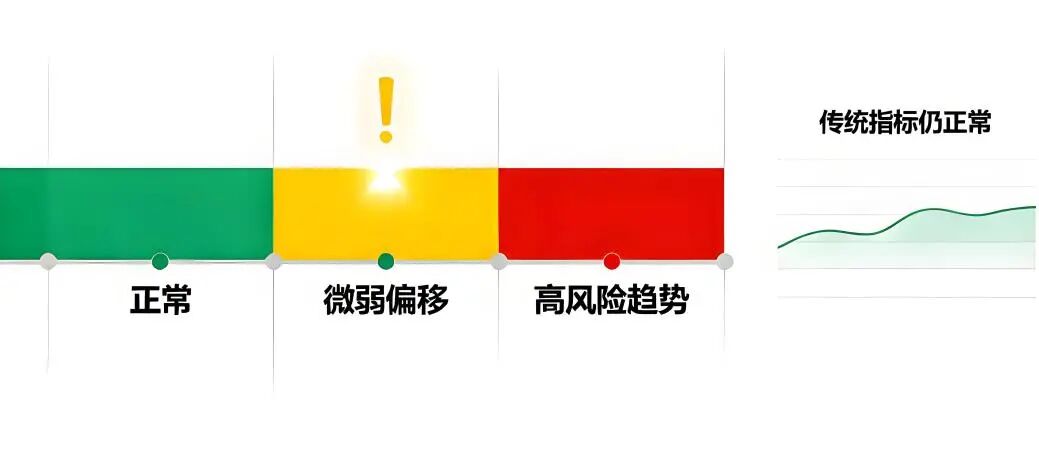
03 ▍ Population stratification: identifying subgroups that look normal but are in different states
For example: among people with equally normal blood glucose,
metabolic pathways may already be moving in two entirely different directions.
Part.3 Typical research application scenarios
▶ Scenario 1: glucose metabolism research
What scientists focus on is not "whether blood glucose has risen," but whether branched-chain amino acids, fatty acid oxidation and glucose–lipid interaction pathways—
show drift that precedes any change in blood glucose.
▶ Scenario 2: lipid metabolic stress research
Conventional lipid panels reveal 3–5 indicators, whereas NMR can reveal the combined patterns of dozens or even hundreds of molecular features, helping to construct more finely differentiated population phenotypes.
▶ Scenario 3: lifestyle intervention research
Scientists can observe whether the metabolic network truly "returns to its axis" after an intervention, rather than simply seeing one indicator fall. This is "systemic response assessment" in research terms, not disease management in clinical terms.
Part.4 From "looking at single indicators" to "watching the pulse of the whole system"
The conventional indicator-by-indicator approach is like observing a few trees in a forest.
What Elixir™ provides is:
the forest's wind direction, humidity, nutrient flows and ecological niche changes.
It does not diagnose disease and does not replace physicians; what it offers scientists is:
● Higher-dimensional data
● Earlier trends
● A more systemic perspective
● Finer subgroup structures
● Clearer research hypotheses
This is an entirely new research toolchain.
The future of chronic disease lies not in treatment, but in understanding.
What Elixir™ brings is not a "chronic disease management product."
It is a capacity for deep interpretation of the pre-disease stage and of systemic drift—
a new entry point for scientific research.
▍ It helps researchers understand how chronic disease "happens slowly,"
▍ helps institutions find trend patterns in large populations,
▍ and helps the medicine of the future
▍ move from "observing events" to "observing processes."
This is the research value we believe in.
