
Frost has settled and the air is turning cold. Hot milk tea, simmering hotpot and nourishing soups make their seasonal return—and so does weight anxiety. The number on the scale creeps up, the waistband feels tighter, and last year's winter wardrobe seems to have shrunk.
"I'm not eating that much—why am I still gaining weight?"
"Has my metabolism really slowed down?"

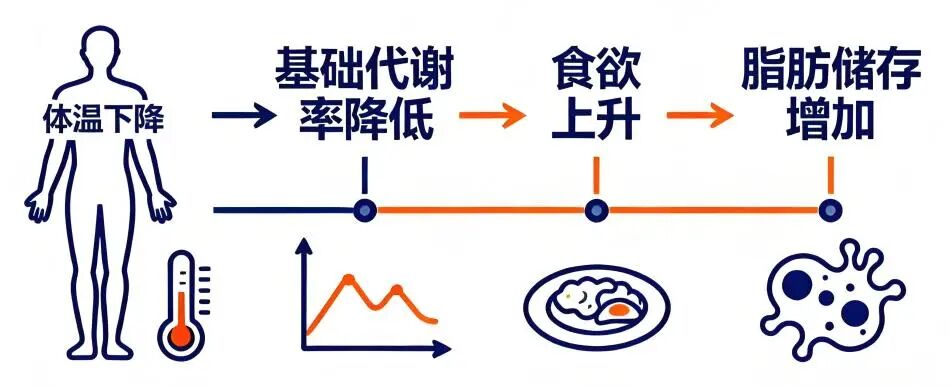
The Body's "Winter Mode": Metabolic Rate Quietly Drops by 5–10%
Research shows that as temperatures fall and daylight shortens,
the basal metabolic rate declines while ghrelin rises,
and the brain starts signaling: "Store some energy for the cold!"
At the same time, serotonin—the "happiness hormone"—also tends to drop,
leaving low spirits and idle cravings behind,
and a growing urge to reach for carbohydrates, sweets and milk tea for a little comfort.
So when you find yourself longing for a full-sugar milk tea in the cold wind,
or craving a steaming bowl of ramen late at night—
don't blame your willpower.
Your body is simply running a winter survival program tens of thousands of years in the making.
A Study That Changes the Conversation: Eating Right Matters More Than Eating Less
A recent study by the University of South Australia, published in European Journal of Nutrition (2025), shows:
After three months of dietary intervention, the prevalence of chronic pain fell from 50% to 24%—but the real driver was not weight loss. It was that—
diet quality improved by 22%.
More vegetables and fruit, more whole grains, fewer processed foods—
can significantly reduce inflammatory responses and improve energy metabolism pathways.
In other words: eating right is a smarter choice than eating less.
(Ward S.J. et al., Eur J Nutr, 2025)
Weight Anxiety Is Really Metabolic Anxiety

If any of this sounds familiar lately—
you eat little yet still feel puffy and sluggish;
the few kilos you lost through dieting quietly come back;
your skin looks dull, your energy is low, and you feel somehow "stuck."
In most cases, the problem is not that you ate too much, but that you ate the wrong things.
Somewhere along your metabolic chain, there may be a knot—
fat is not being burned smoothly, sugar not used efficiently,
or low-grade inflammation and minor gut microbiota imbalances are leaving energy stranded halfway.
MiMi™: Reading the Body's Metabolic Language

Rather than dieting blindly, it pays to look precisely. By analyzing metabolite signals in urine, MiMi™ helps you:
 Pinpoint exactly where metabolism is stuck
Is fat metabolism inefficient? Is carbohydrate handling weak? Or is chronic inflammation holding you back?
 Receive a personalized nutrition plan
Based on your metabolic profile, you receive precise dietary guidance: supplement whatever is lacking, and nothing that is not.
 Track your metabolic progress
Through testing at defined intervals, you can see directly how lifestyle adjustments are shifting your metabolism.
A Practical Guide to Metabolic Care in Autumn and Winter
 Warmth does not have to mean greasy
Choose steaming, boiling and stewing over frying: you keep the warmth while easing the metabolic burden.
 Add color to fight inflammation
A daily serving of polyphenol-rich fruit—blueberries, pomegranate, kiwi—helps the body counter oxidative stress.
 Eat dinner earlier, and sleep well
Studies suggest that for every hour bedtime is delayed, the basal metabolic rate may fall by around 5%.
 Get the body moving
No high-intensity training required: ten minutes of brisk walking a day is enough to activate the AMPK metabolic pathway and wake the body up.
Autumn and winter need not be an anxious "weight-gain season"; they can be a rare window for metabolic recalibration. The silence of the scale is not your failure—it is your body waiting for a signal that understands it better.
With MiMi™, every whisper from your body gets a scientific answer.This winter, start by tuning your metabolism, and embrace a lighter, more confident you.