
In the hospital, CT is indeed something of an "all-rounder" — it can quickly locate hidden bleeding, distinguish shadows in the lung, and even take part in tumour staging and pre-operative assessment. In a single rotation, the complex internal structures of the human body are laid out on screen like a Lego model taken apart, with a clarity of detail that never ceases to amaze. Yet this convenience is not without a price: CT uses invisible ionizing radiation, which may plant the seeds of mutation deep within cells and raise the risk of developing cancer later in life.
The Higher the Radiation Dose, the Greater the Cancer Risk
This is especially true for children, who are still developing: their tissues are in a phase of rapid growth and active cell division, which makes the potential consequences of every radiation exposure particularly worthy of attention. A large-scale study recently published in BMC Medicine[1] provides epidemiological evidence that cannot be ignored: the higher the radiation dose received from CT, the greater a child's future risk of developing multiple types of cancer.
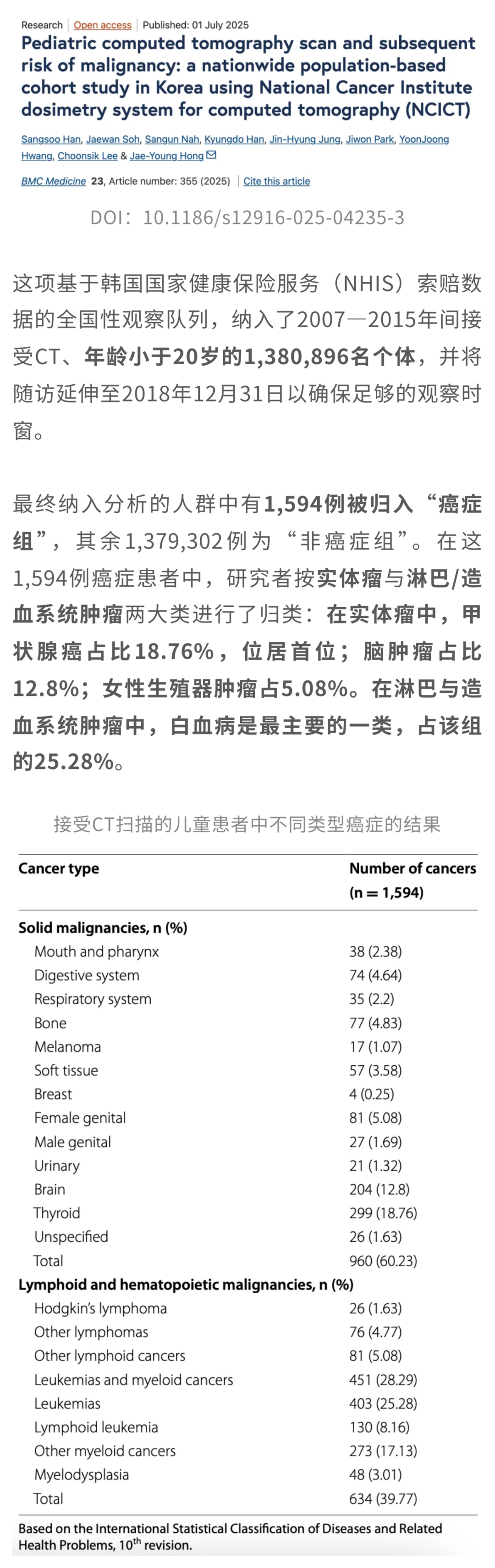
More quantitative analysis shows that even after adjusting for potential confounding variables such as age, sex, household income and place of residence, the overall risk of cancer still rose significantly with every standard deviation increase in the dose received by the exposed organ. The organs most clearly affected were concentrated in regions that are sensitive to radiation, such as the digestive, urinary and nervous systems.
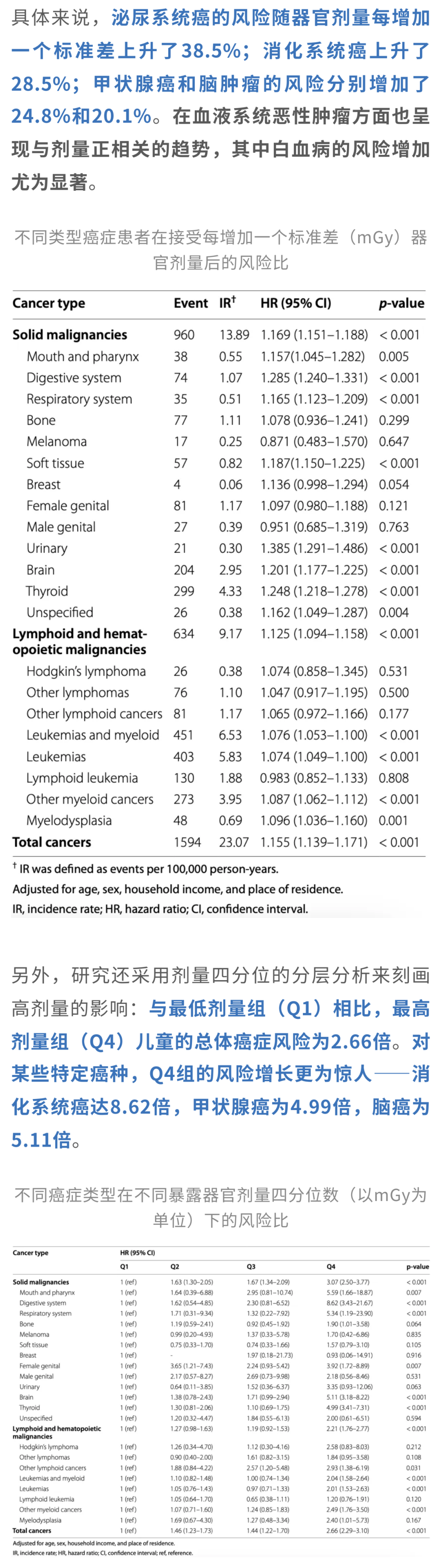
This dose–response pattern clearly indicates that the higher the CT dose received, the greater the risk of malignant tumours in several important organs in children.
In summary, this study points to a significant dose–response relationship between CT scans received in childhood and the risk of multiple cancer types, most notably tumours of the urinary system, thyroid, brain, digestive system and blood system.
A Single Scan Is Harmless,
But Repeated Scans May Ignite a Hidden Risk
Of course, when we talk about radiation risk, dose is an unavoidable premise — as the old saying goes, "talking about toxicity without talking about dose is just nonsense". The radiation from a single CT scan is usually very low and is unlikely to cause visible harm in the short term, but the problem lies not in "this one scan" but in the cumulative effect of "scan after scan."
It is like a pot of water being heated again and again: at first it is only slightly warm, but over time the temperature keeps climbing until it finally reaches a level that is hard to bear. Radiation exposure from CT examinations follows a similar logic to some extent — each exposure is small, but once many exposures accumulate, it deserves caution.
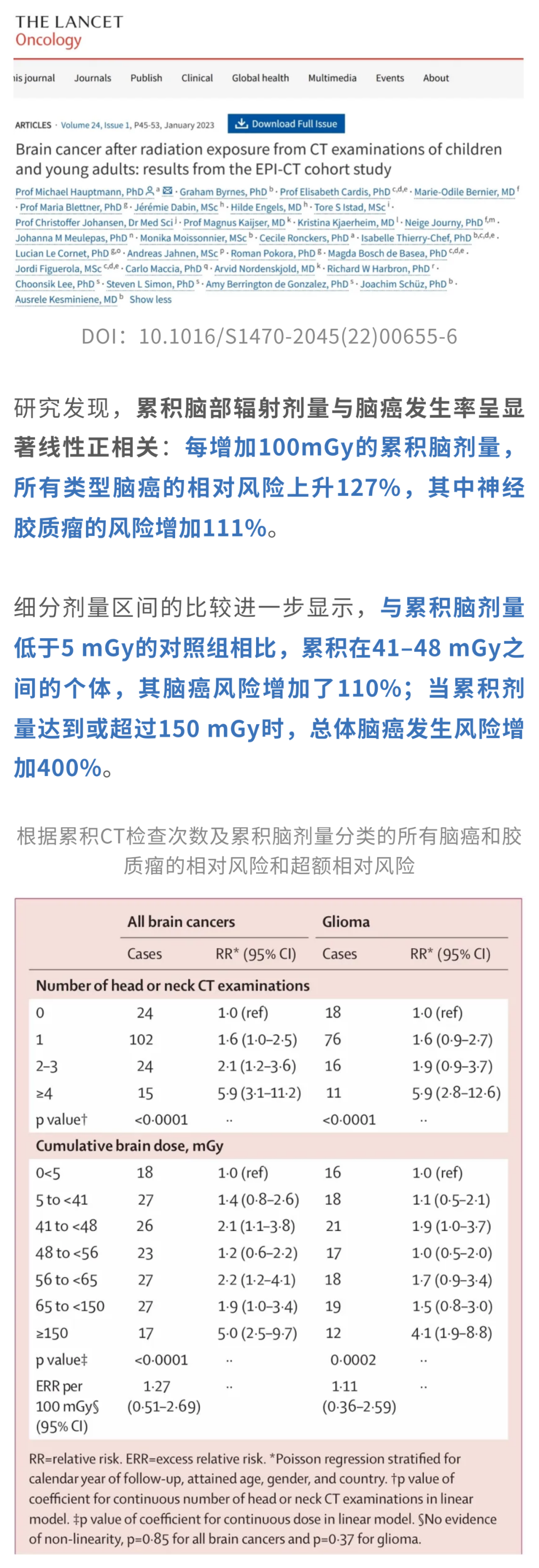
The Lancet Oncology, in a large prospective cohort study covering nine European countries and nearly 660,000 people, [2] has provided striking epidemiological evidence for this cumulative risk.
The risk from CT radiation does not stop at solid tumours; the blood system may be affected as well. Another study published in Nature Medicine [3] further revealed a positive association between cumulative CT dose and haematological malignancies.
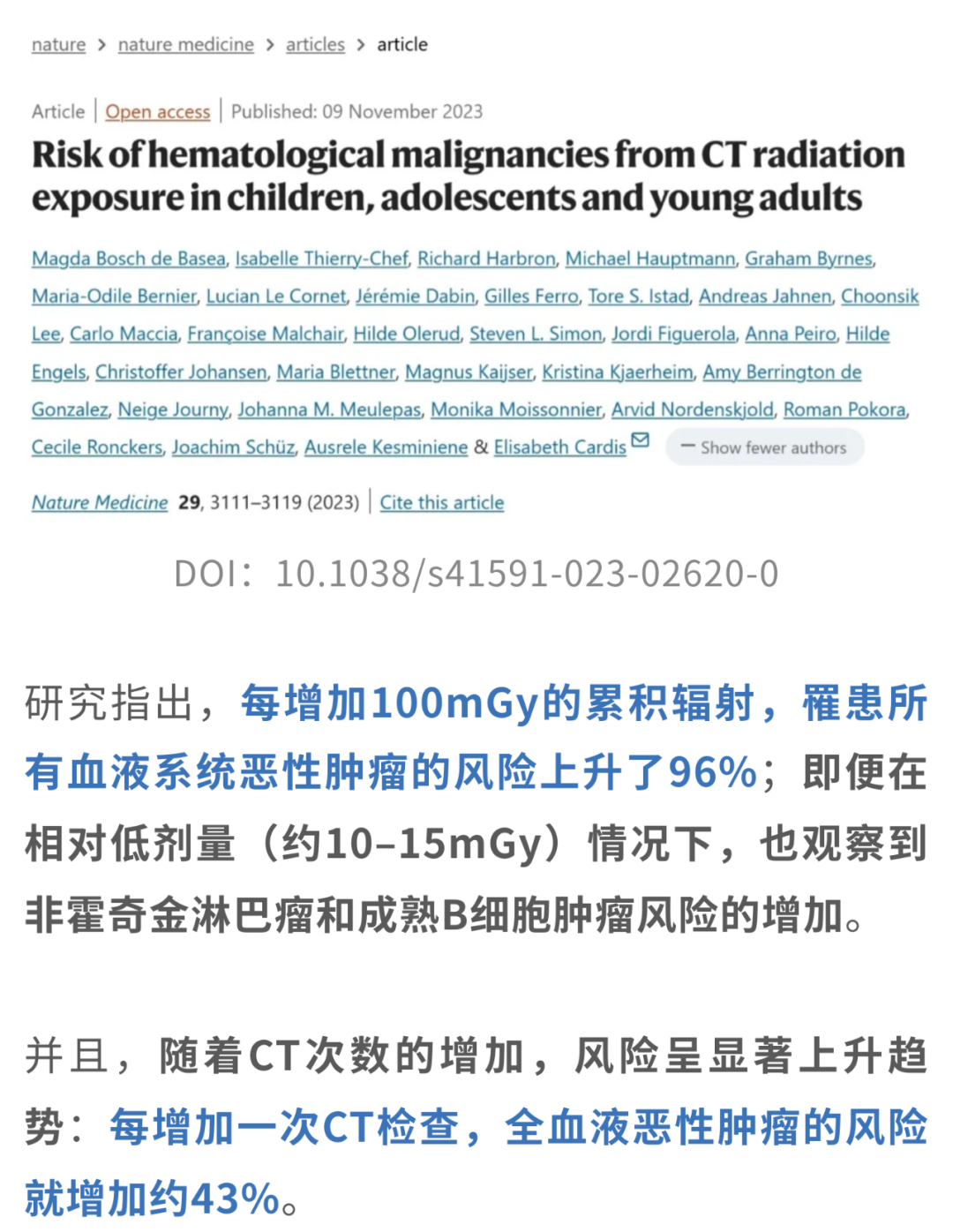
Taken together, these findings show that even though the dose from a single examination is limited, the potential negative impact on the long-term health of children and adolescents is progressively amplified as the number of scans and the cumulative dose increase.
High Per-Unit Risk in Children,
High Aggregate Risk in Adults
In fact, the studies above focus mainly on children and adolescents. Yet if you look around the CT waiting area of a hospital, you will notice that children are not the only ones queueing. This raises a key question: when adults, or even middle-aged and older people, undergo CT scans, does this ionizing radiation also pose a health hazard?
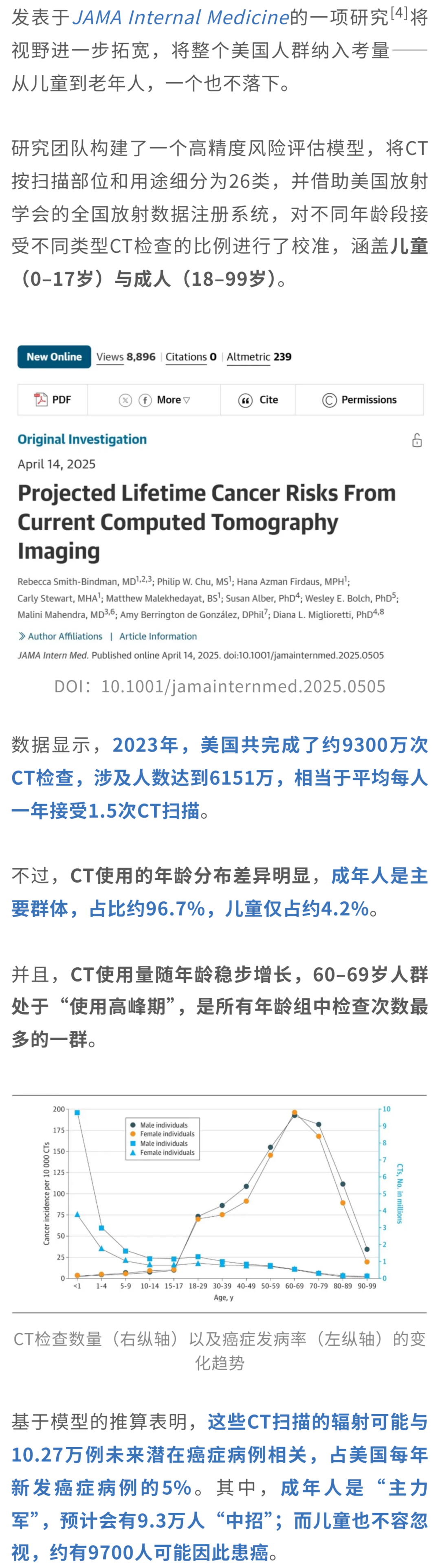
Although children account for only 3.3% of CT examinations, their tissues are still developing, their cells divide rapidly, and they are extremely sensitive to ionizing radiation, like a seedling that has just sprouted: even a small amount of scorching sun can easily leave a scar.
By age distribution, the potential risk is highest in infancy and early childhood, then declines gradually with age.This does not mean, however, that adults can be entirely reassured.The cancer risk from a single CT scan is relatively low in adults, but because adults undergo CT examinations far more often than children, the total number of cancer cases attributable to them still ranks among the highest.
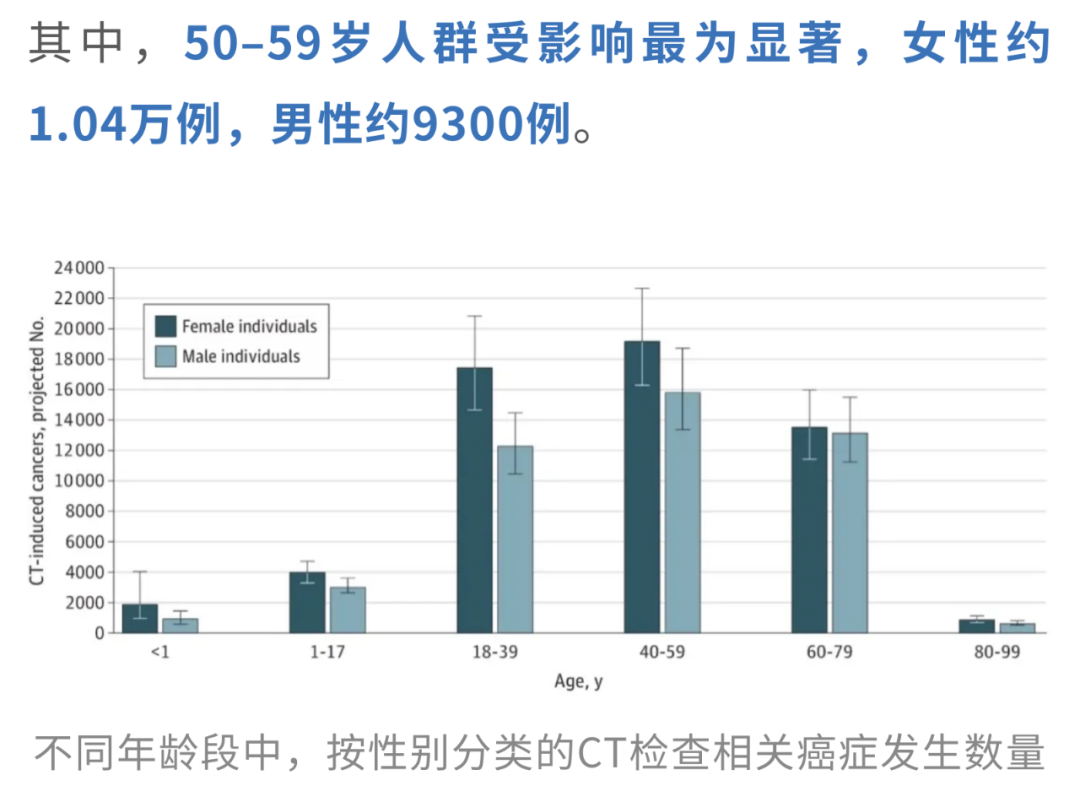
This also reminds us that in assessing the risks of CT examinations, children carry a higher "risk per unit," while adults bear the larger "aggregate risk."
The Real Risk Lies Here:
One Scan Is Nothing to Fear — Repetition Is What Matters
After reading these studies, many people may start to worry, and may even wonder: does this mean I can never have a CT scan again?In truth, there is no need to panic.
We are not trying to talk anyone out of it, and we are certainly not demonizing CT. Taken together, the studies suggest that what truly deserves attention is not the radiation from a single examination, but the cumulative radiation exposure that comes from repeated CT scans over a short period of time.Frequent, cumulative exposure is where the potential risk really lies.
In the follow-up management of stage I lung cancer, CT is still the most commonly used tool, which leaves many patients caught in the dilemma of "repeated scans for peace of mind". Is it possible, right after surgery, to identify an individual's recurrence risk with a single test, and thereby reduce unnecessary cumulative CT exposure?
This is exactly the challenge that the PT-L1™ stage I lung cancer recurrence risk prediction system aims to address. Built on functional proteomics and AI modelling, it performs absolute quantification of dozens of key proteins in surgical tissue; a single test can deliver a recurrence risk stratification early after surgery. For high-risk patients, this means intervention can begin sooner, catching the critical window; for low-risk patients, it avoids the radiation burden of excessive follow-up and repeated CT scans.
ProteinT: Post-Operative Recurrence Risk Prediction for Patients with Stage I Lung Cancer
— PT-L1™
PT-L1™ calculates a patient's recurrence risk score using the stage I lung cancer recurrence risk model independently developed by ProteinT; it is a product that assesses a patient's risk of recurrence within five years after surgery.Liquid chromatography–tandem mass spectrometry (LC-MS/MS) is used for proteomic testing of the patient's tumour tissue; the predicted five-year disease-free survival rates for patients at low and high recurrence risk are 98.8% and 13.3% respectively.
For patients at high recurrence risk, the frequency of follow-up and re-examination should be increased, with appropriate intervention, so as to achieve early diagnosis and early treatment of recurrence, prolong survival and avoid delays in treatment;
for patients at low recurrence risk, routine follow-up is sufficient, lowering screening costs and reducing the psychological and financial burden on patients. This provides a basis for clinicians and patients to develop more personalized screening plans and intervention measures.
Authoritative bodies have issued clear guidance on the relationship between radiation dose and cancer risk. The International Commission on Radiological Protection (ICRP) has assessed that when the cumulative effective dose is below 100 mSv, current epidemiological evidence is not sufficient to confirm a significant increase in cancer risk. Based on the LNT model, however, even very low doses carry some risk, so caution remains advisable and risk is assumed to exist[5].
And the World Health Organization (WHO) also stresses that once the cumulative ionizing radiation dose exceeds 100 mSv, the risk of cancer rises significantly[6].
It can be seen, therefore, that CT still holds irreplaceable value in clinical diagnosis. The key lies in choosing the right patients for scanning, examining only when necessary, and optimizing the radiation dose during the procedure, so that CT is used well and used wisely.
So, how much radiation does a single CT scan actually involve?According to data from authoritative bodies such as the American College of Radiology (ACR), the effective dose varies to some extent between different types of CT examination[7-9]:
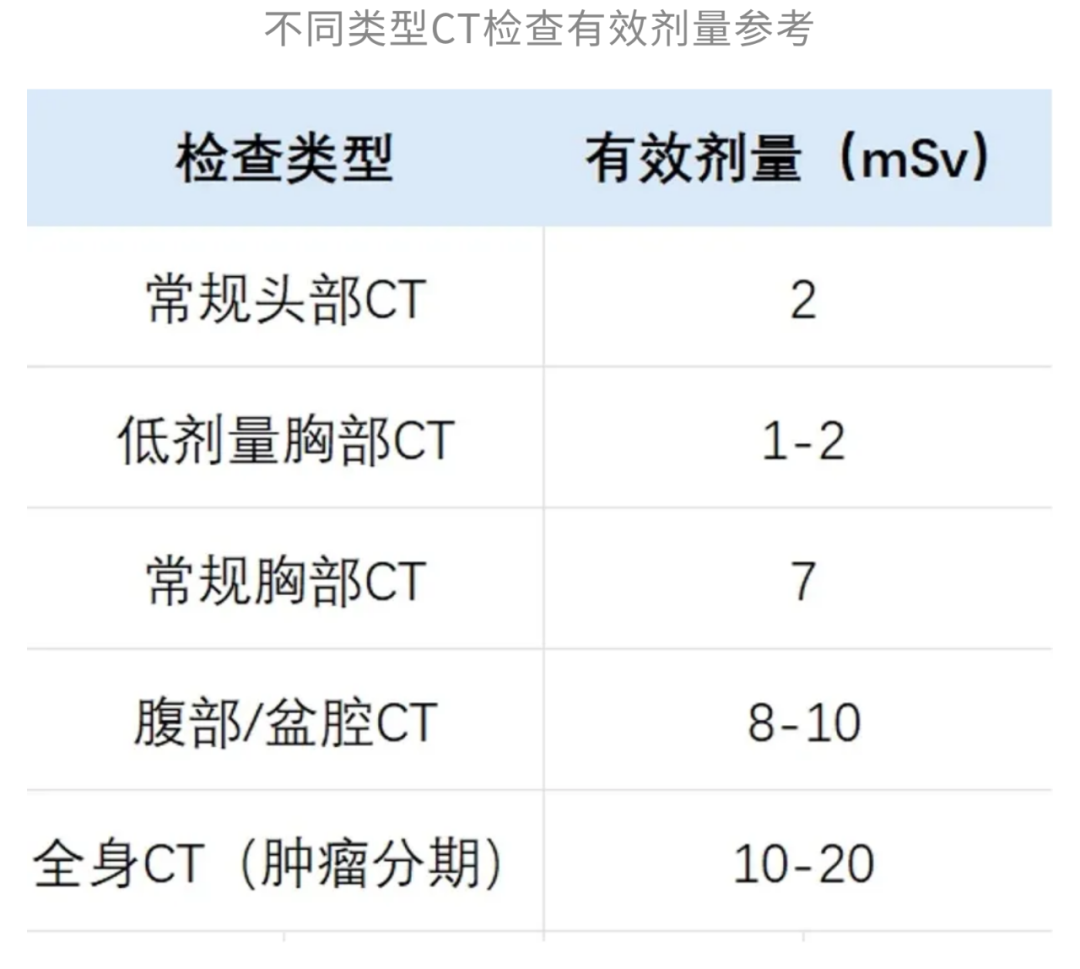 It is not hard to see that if scans are repeated within a short period, the cumulative dose may gradually approach or even exceed 100 mSv, and the risk can no longer be taken lightly.
In this age of technological wonders, CT scanning is like a magical key that opens the door to the body's deepest secrets and lets us glimpse truths the naked eye can never reach. Yet using this key is not without a price. Clinicians should fully weigh the benefits against the risks before ordering every CT examination. And we, as guardians of our own health, should also take the initiative to tell our doctors about our medical history (including whether we have had a CT scan recently). Blindly chasing "peace of mind" by repeatedly asking for CT scans may not be the true path to reassurance.
It should also be noted that these studies [1-4] cannot yet establish a direct causal relationship.
