
Over the past two days, many people have been following a piece of deeply saddening news. An educator known for long hours of intense work and a sharp, high-energy style passed away suddenly from sudden cardiac death on March 24, 2026, at the age of 42. The calm, restrained words of the obituary contrast sharply with the vibrant life he once led. What makes it even more poignant is that just two days earlier, he had posted on social media that he had run a cumulative 72 kilometres that month. How can someone who exercised regularly be gone so suddenly?
Sudden cardiac death is never truly "without warning"
Many people cannot understand: why would a person who appears energetic and even keeps running be struck down by sudden cardiac death? In fact, behind sudden cardiac death there is often not a "heart that suddenly stopped beating", but a concentrated eruption after long-term accumulation of risk. Among these, one core factor is repeatedly highlighted: vascular problems.
Modern medicine has long made it clear: abnormal blood lipids are one of the important risk factors for atherosclerosis; plaques in blood vessels become unstable under factors such as stress, fatigue, and emotional fluctuation; and once a plaque ruptures and forms a thrombus that blocks a key vessel, it can lead to serious consequences.
Intense work, back-to-back schedules, and enormous mental stress — even running may only serve to "offset" overdrawing one's body, and internal vascular changes do not warn you in advance through "pain".
The "false health" of midlife: the most dangerous form of complacency
What truly deserves everyone's vigilance here is not that "running can cause sudden death", but that too many middle-aged people are using the visible "self-discipline" of the surface to conceal the invisible "loss of control" inside the body.
We often assume: "I exercise every week, so my body should be fine", "My health check report hasn't raised any red flags, so I don't need to worry", "I'm still young, risk is far away from me". But the reality is: exercise does not directly reflect vascular status, and a routine health check can hardly reveal the structural risks of blood lipids. Atherosclerosis does not form in a day, but once it reaches a critical stage, a single trigger may be all it takes to erupt suddenly.
Why talk about blood lipids today?
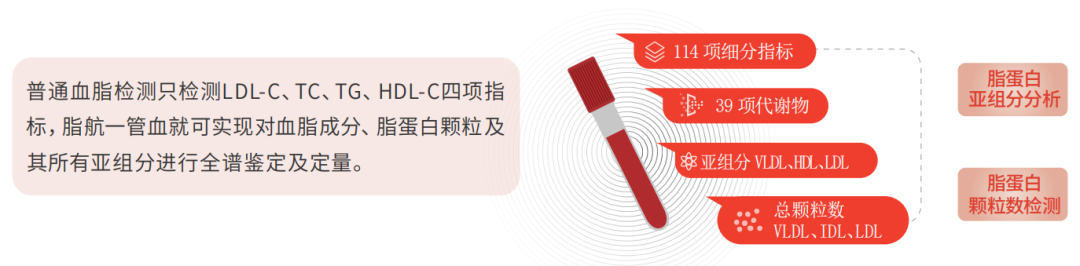
Many people assume that paying attention to blood lipids is a "topic for middle-aged and older people" or a matter of "chronic management". But in fact, it is more like a long-term risk-management project. You cannot feel it, yet it keeps happening. Precisely for this reason, more and more people are turning to more refined ways of assessing blood lipids. Zhihang™ Full-Spectrum Blood Lipid Testing is exactly such a product — through more refined lipid analysis, it helps reveal potential risks that have not yet surfaced.
The essence of health management is to see risks in advance
We cannot predict every accident, but we can minimise being "completely unprepared". What truly deserves vigilance is not a single late night or a lapse in diet, but those states of the body that have accumulated over the long term yet have never been seriously assessed. For this reason, more and more people are upgrading health management from "monitoring results" to "assessing processes".
If you or your family are in a state of high pressure, frequent social engagements, and irregular routines, or if abnormal or borderline blood lipid values have already appeared in a health check, it may be worth considering a more systematic understanding of your vascular condition.
Search "谱天脂航" on JD.com, and give your health one more measure of certainty.

ProteinT / 谱天生物
INNOVATION FOR NEXT GENERATION
ProteinT is a national-level high-tech enterprise focused on the field of precision medicine multi-omics. As the lead unit of the Tianjin Key Laboratory of Clinical Multi-Omics, it took the lead in conducting "gene + protein + metabolism" multi-omics research, and its independently developed proteomics liquid biopsy technology is at an internationally leading level. Core team members come from well-known research institutions at home and abroad, including Yale University, the National Institutes of Health (USA), and the National Center for Protein Sciences. Its R&D pipeline covers common single cancers and pan-cancer types such as liver, lung, gastric, esophageal, colorectal, and pancreatic cancers, and extends to major chronic diseases such as cardiovascular and cerebrovascular diseases, focusing on key research directions including early screening and early diagnosis, recurrence monitoring, and medication guidance. Its Umbrella™ clinical molecular database, with core intellectual property rights, contains more than 100,000 clinical sample records. ProteinT is committed to continuous technological innovation and clinical translation of cutting-edge achievements, advancing precision medicine and exploring the infinite possibilities of human health.
