

From September 22 to 26, 2026, the 4th π-HuB Global Summit, the 14th Chinese Human Proteome Organization (CNHUPO) Congress and related conferences were held in Changde, Hunan Province. Under the theme "Decoding Life, Synthesizing the Future", more than a thousand delegates from over 20 countries and regions gathered in Changde to exchange the latest advances in proteomics.
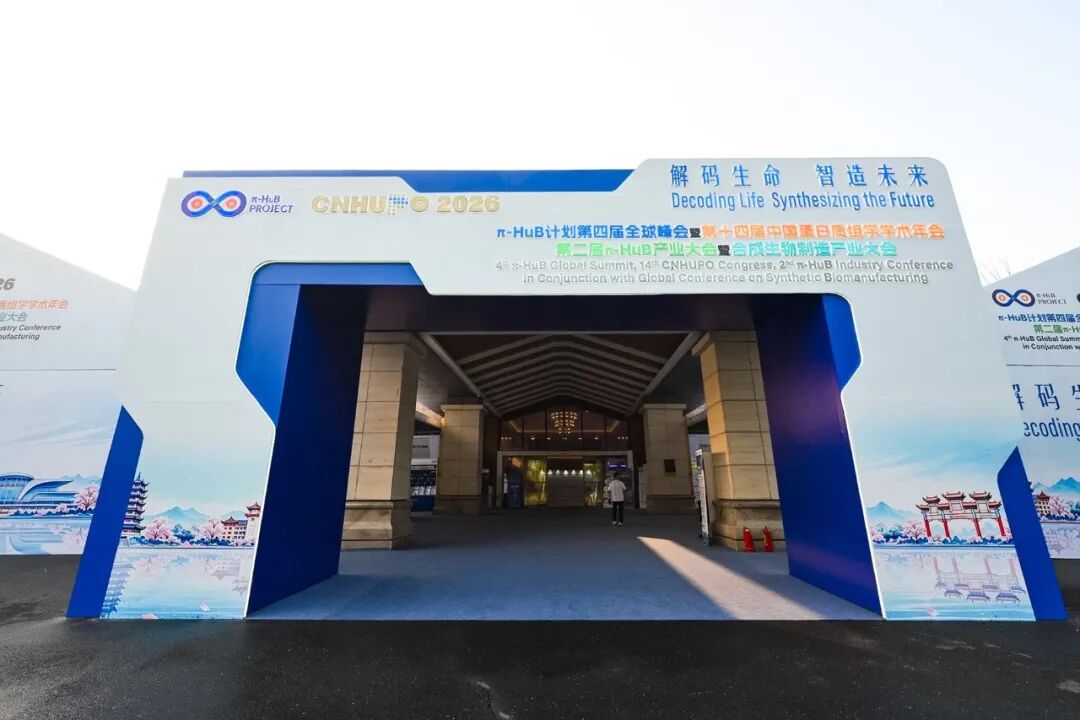
The 2026 CNHUPO venue in Changde
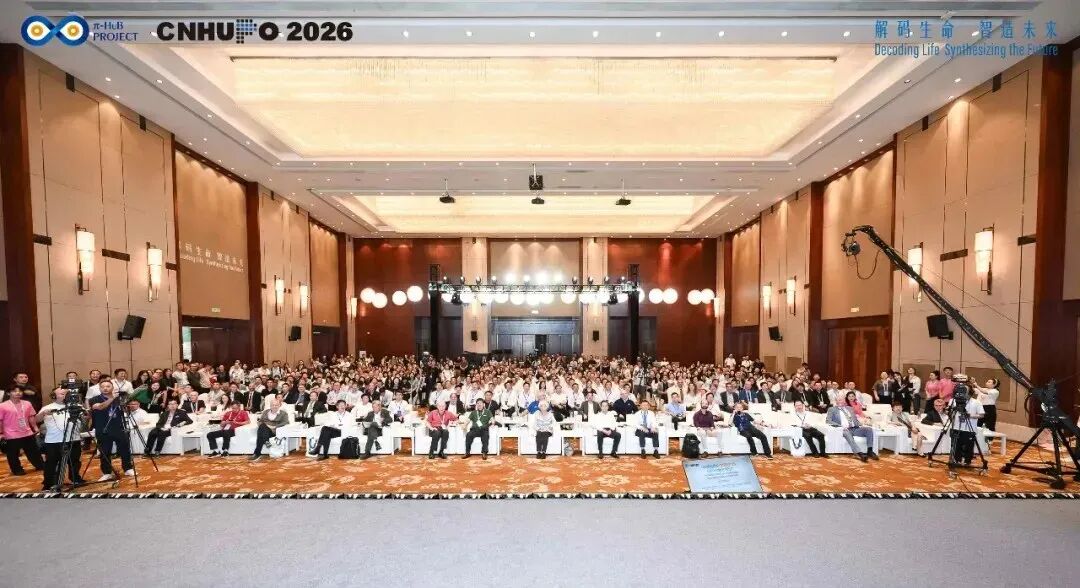
Group photo of the 2026 CNHUPO Congress
From AI and computational proteomics to clinical proteomics, chemical proteomics and drug discovery, more than 150 keynote presentations and a number of parallel forums traced the journey from basic research and technological innovation to clinical translation. Discussions on data analysis, disease mechanisms and research applications also extended from the lecture halls to the posters and exhibition areas.
ProteinT Shares Its Research Progress
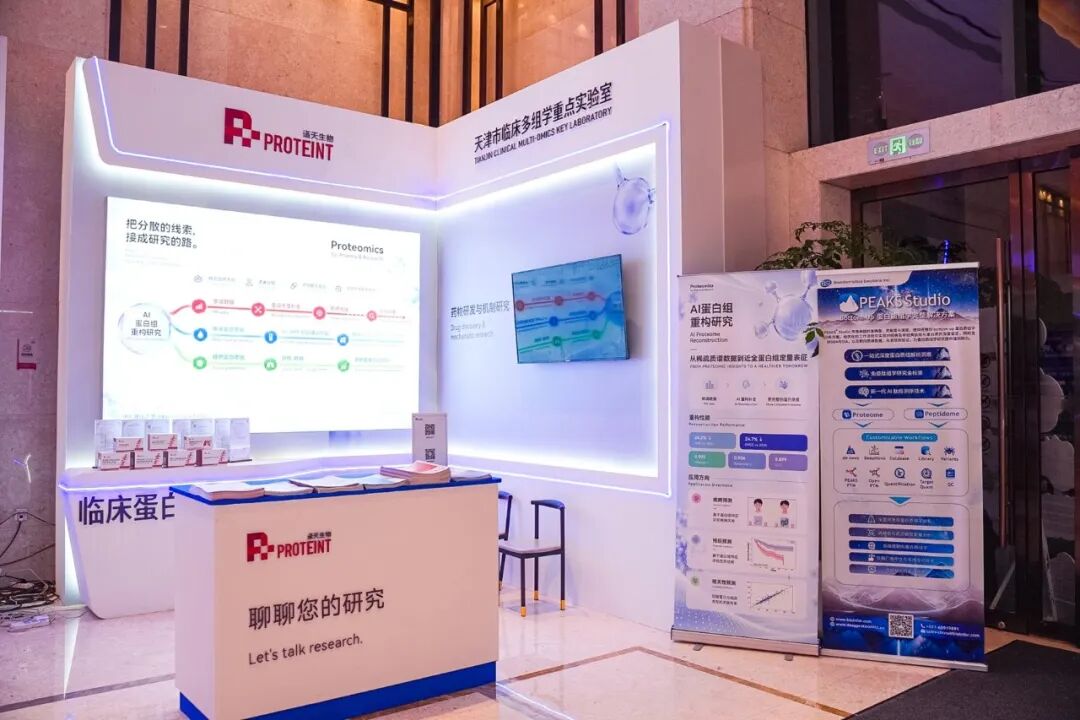
ProteinT at the CNHUPO exhibition
In this academic exchange, ProteinT presented its AI-empowered proteomics research, sharing technical insights with fellow attendees and exploring application directions of proteomics in disease and drug research. "Let's talk research." — this invitation on our booth also expressed what we hoped for at the event: starting from concrete research topics and exploring what further clues proteomic data can provide. Focusing on body-fluid and tissue proteomics, we demonstrated a research path from mass-spectrometry data and protein abundance completion to target prioritization and mechanism exploration.
Using AI to Complete Proteomic Information
Mass spectrometry provides important clues for research, yet a single sample often yields only a partial set of proteins. How to leverage existing data to obtain more complete protein abundance information was the core question showcased this time.
The study presented here aggregated 9,799 proteomic samples, covering 15 tissue types, 8 classes of mass spectrometers and 19,583 protein groups. By learning the associations among proteins, the model reconstructs sparse data to provide more complete protein abundance information for downstream analysis.
In the masked-reconstruction evaluation across the full-scale protein groups, compared with KNN imputation, the mean absolute error (MAE) decreased by 26.2% and the root mean square error (RMSE) decreased by 24.7%. These results provide a research basis for further utilizing existing cohort data; in the analysis, experimentally measured values and model-inferred values must still be clearly distinguished.
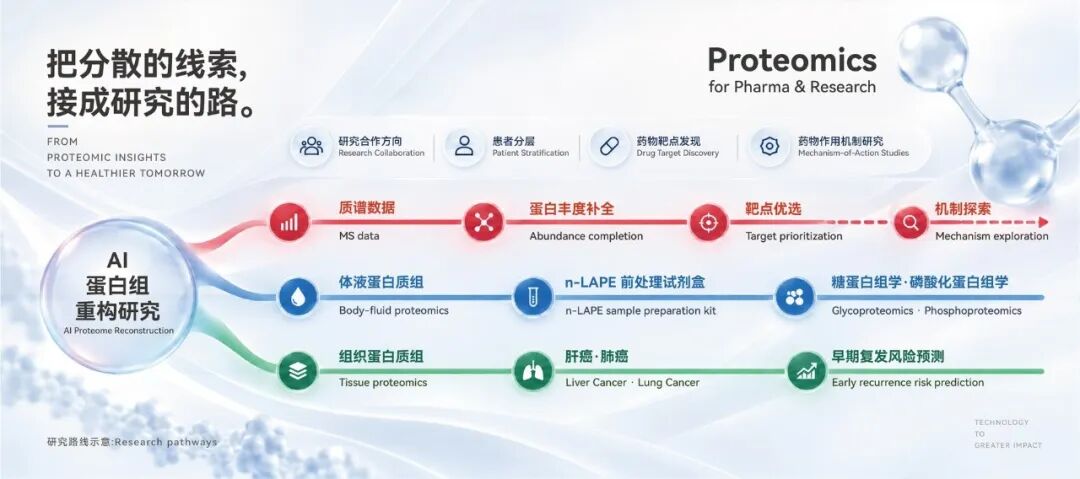
Schematic of the AI proteome reconstruction research path
Continuing the Conversation Around Concrete Topics
The presentation also introduced application directions such as disease prediction, prognosis prediction and association analysis between proteins and clinical phenotypes, extending to patient stratification, drug target discovery and mechanism-of-action studies. We hope to explore the application value of proteomic data together with more research teams around concrete scientific questions.
We thank every colleague who visited the ProteinT booth, and the Congress for building this platform for academic exchange. The journey to Changde has come to an end, but the conversation about research continues. You are welcome to share your research needs with ProteinT — together, let us connect scattered clues into a path of research.
ProteinT
INNOVATION FOR NEXT GENERATION
ProteinT is a national high-tech enterprise focusing on the field of precision-medicine multi-omics. As the lead institution of the Tianjin Clinical Multi-Omics Key Laboratory, it is among the first to conduct multi-omics research integrating "genes + proteins + metabolites," and its self-developed proteomics liquid-biopsy technology is at an internationally leading level. Core team members come from well-known research institutions at home and abroad, including Yale University, the U.S. National Institutes of Health and the National Center for Protein Sciences.
Its R&D pipeline covers common single cancers such as liver, lung, gastric, esophageal, colorectal and pancreatic cancer, as well as pan-cancer indications, and extends to major chronic diseases such as cardiovascular and cerebrovascular conditions, focusing on key research directions including early screening and diagnosis, recurrence monitoring and medication guidance. The core intellectual property Umbrella™ clinical molecular database encompasses more than 100,000 clinical sample records.
ProteinT is committed to continuous technological innovation and the clinical translation of frontier achievements, advancing the development of precision medicine and exploring the infinite possibilities of human health.
