

When a plasma protein test is performed, what are we actually reading — a disease signal, or the "background" left by age, puberty, body weight, and genetic background? The large-scale pediatric plasma proteomics study published in Nature Genetics by the teams of Matthias Mann and Torben Hansen provides a more accurate answer: among 1216 proteins that passed quality control, 58% were associated with age, sex, or BMI; when genetic factors were also taken into account, about 70% of the proteins were affected by at least one factor. For biomarker development, what really matters is not that a protein "changed," but why it changed.
Why can't a child's test result be interpreted against adult reference values alone?
The "reference range" on a test report easily creates an intuition: protein levels should be as stable as a ruler, and only values outside the range indicate abnormality.
But for children and adolescents, the body itself is changing rapidly. Growth, pubertal development, hormonal fluctuations, skeletal maturation, immune system changes, and body weight status may all rewrite plasma protein levels at the same time. The same protein may correspond to completely different physiological contexts at ages 8, 13, and 18.
If these differences are ignored, researchers may mistake normal development for a disease signal, or treat stable differences caused by genetics as changes caused by treatment or disease progression.
This is precisely what makes the Mann team's study most noteworthy: it does not merely ask "which proteins differ," but seeks to build a dynamic map of the pediatric plasma proteome.
How large was this study?
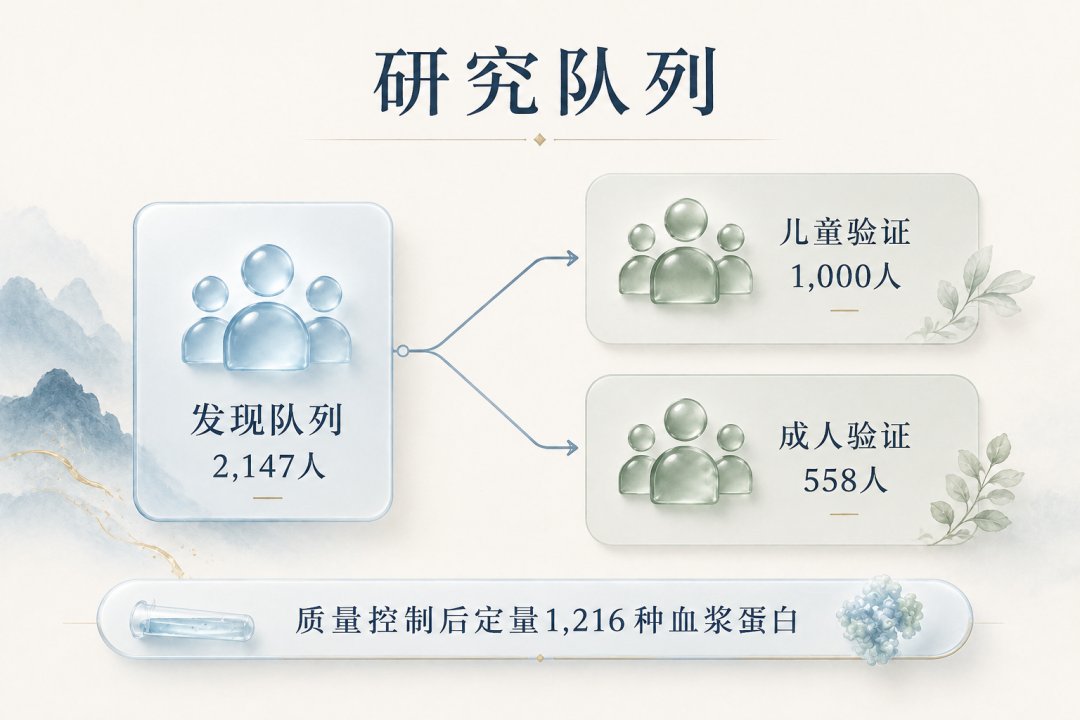
The discovery cohort came from the Danish HOLBAEK study, comprising 2147 children and adolescents aged 5–20 years, including both the general population and a pediatric obesity outpatient population.
The researchers used a mass-spectrometry-based plasma proteomics workflow, quantifying 1216 proteins after quality control; they also analyzed 5.2 million SNPs, combined with information on age, sex, BMI standard deviation score, obesity status, pubertal status, and sample storage time.
To validate the results, the team used two additional independent sample sets: 1000 children and adolescents, and 558 adult participants from an alcohol-related liver disease cohort. In other words, this work not only observed differences within children, but further asked: do the genetic effects seen in childhood persist into adulthood?
Start with the most intuitive finding: development itself rewrites the proteome
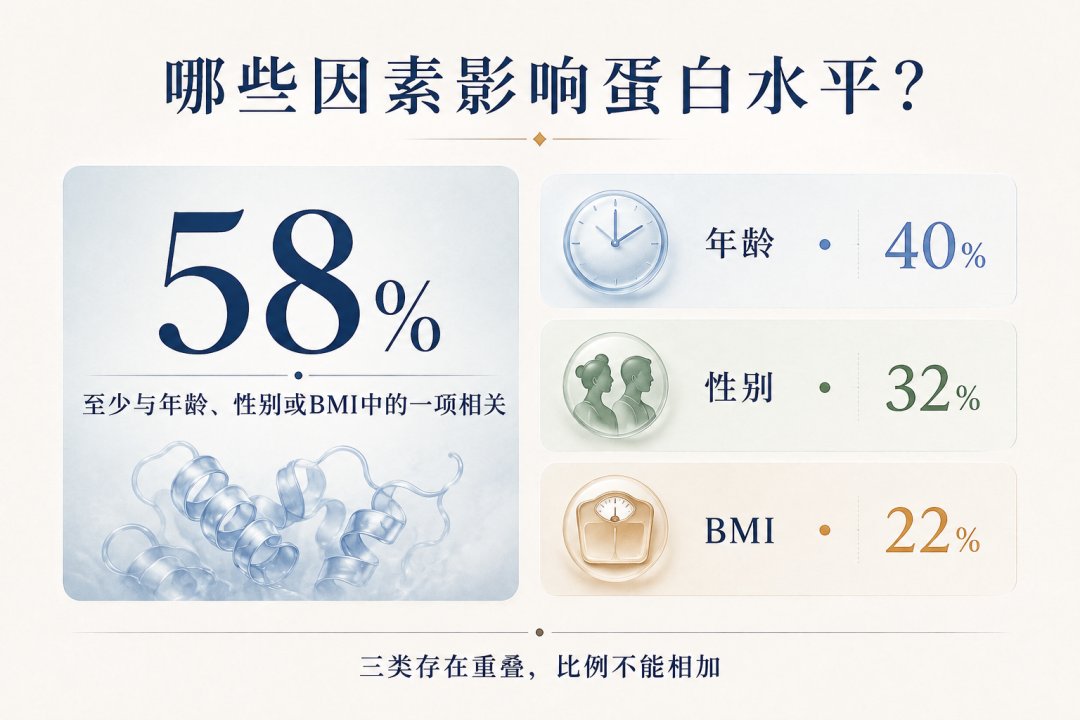
The published data show that among 1216 proteins, 58% were associated with at least one of age, sex, or BMI standard deviation score. Among them, 40% were associated with age, 32% with sex, 22% with BMI, and 8% with all three factors simultaneously.
These numbers cannot simply be added together, because the same protein may be affected by multiple factors at once. Together they show that the pediatric plasma proteome is not a static photograph, but a "molecular film" that changes continuously with development.
For example, IGF1 peaks and then declines around age 12–13 in girls and 14–15 in boys; ACAN, COL1A1, COL1A2, COMP, and other proteins related to bone and cartilage development decline after puberty and show sex-related temporal differences.
Changes related to obesity are not limited to traditional inflammatory markers. Adiponectin, CRP, SHBG, IGFBP1, IGFBP2, and other proteins show body-weight-status-related differences, and the study also identified a group of candidate proteins less commonly linked to pediatric obesity before.
How close can 50 proteins get to estimating age?
The researchers then turned the question around: since the proteome changes with development, can age and BMI be inferred from protein levels?
In a test set of 639 individuals not used for model training, a model composed of 50 proteins predicted age with a mean absolute error of about 1.2 years and a correlation of 0.85 between predicted and actual age. Using only the top 5–10 proteins, the mean error was still about 1.5–1.6 years.
This does not mean that a single blood draw can determine whether a child's "development is normal," nor does it mean it can be directly used for clinical diagnosis. It is more of a proof of concept: plasma proteins do record the systemic trajectory of growth and development, so establishing age-stratified reference values in pediatric cohorts is an indispensable step in biomarker research.
Proteins are influenced not only by growth, but by differences written in the genes
Among 1909 participants with both proteomic, genotypic, and covariate data, the team examined the relationship between 5.2 million SNPs and the levels of 1216 proteins.
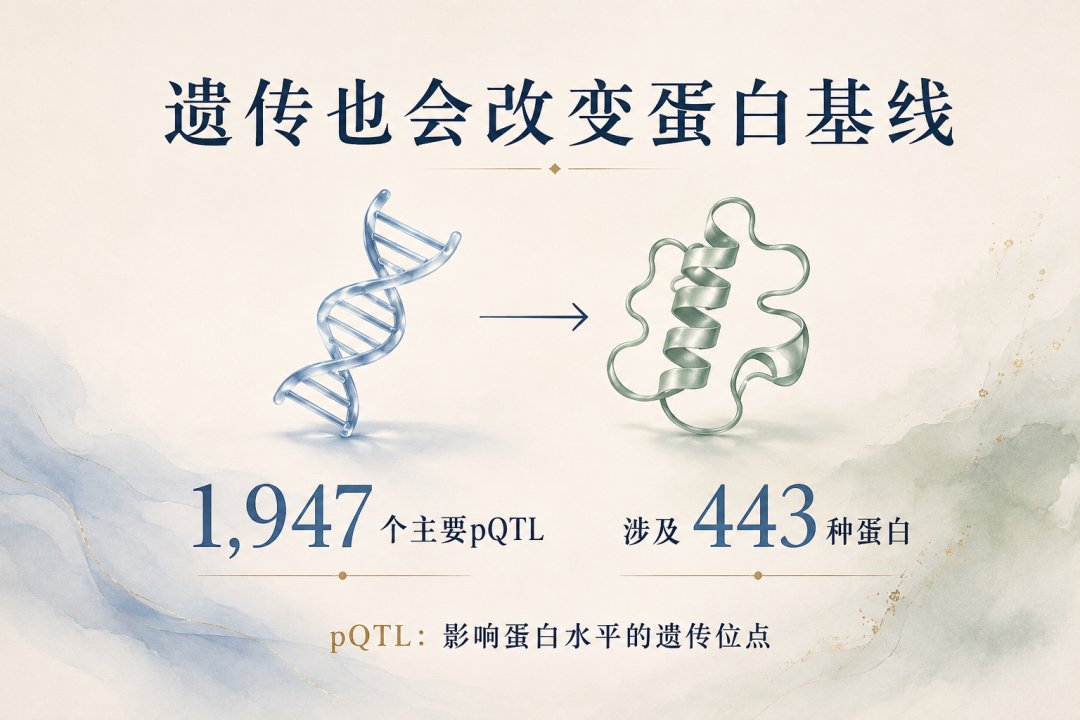
Using the conventional genome-wide significance threshold, the study identified 1947 primary pQTLs involving 443 proteins; after further conditional analysis, 733 conditionally independent pQTLs were obtained. In the study, 62% of the pQTLs were cis-regulatory, i.e., located near the gene encoding the corresponding protein.
A pQTL can be understood as "a genetic locus that affects protein levels." For some proteins, the differences between genotypes are not small: for 143 pQTLs corresponding to 71 proteins, the protein level differences between homozygous genotypes exceeded 2-fold; individual effects can reach several tens of fold.
This directly affects marker interpretation. If a candidate protein is strongly regulated by genetic background, then part of the difference between case and control groups may come from gene frequency rather than from the disease itself.
Do these genetic effects disappear with age?
The study divided the pediatric discovery cohort into 5–9, 10–14, and 15–20 year groups; the genetic effects maintained high consistency across the three age groups, with correlation coefficients of 0.95–0.98.
In independent validation, 97% of the verifiable pQTLs were replicated in 1000 children and adolescents, and 91% were replicated in 558 adults; the effect direction and magnitude between the discovery and validation cohorts were also highly consistent, with correlation coefficients of 0.97 and 0.98, respectively.
This means that many genetic effects that begin to influence protein levels in childhood do not easily disappear in adulthood. For cohort studies requiring cross-age follow-up, pQTLs are not background noise to be ignored, but fundamental variables that should be incorporated into study design and statistical models in advance.
Why does this matter especially for biomarker development?
A protein elevating in a case group does not automatically mean "it is a disease marker." Researchers must simultaneously ask at least four questions: does it change with age? Are there sex differences? Is it affected by BMI or obesity status? Is it strongly regulated by a pQTL?
The Mann team's variance decomposition shows that among proteins with pQTLs, 63% of the proteins had more variance explained by pQTLs than by age, sex, BMI, and obesity status combined. In other words, for some proteins, genetic background determines their baseline levels even more than common demographic factors.
The paper further combined high-confidence pQTLs with cardiometabolic GWAS data. Mendelian randomization analysis yielded 345 protein–trait relationships, of which 101 were also supported by colocalization analysis, involving 41 genes and 33 traits.
These results provide clues for disease mechanism and drug target research, but should still be understood as potential causal relationships supported by genetic evidence, not as direct proof of drug efficacy or clinical use.

A number that must be corrected: why is it not "90% affected by non-genetic factors"?
Some secondary coverage of this study used the statement that "90% of proteins are affected by age, sex, or BMI." This number comes from an earlier-stage formulation and easily mixes different statistical definitions.
According to the main text of the paper formally published in 2025, the three factors — age, sex, and BMI — together were associated with 58% of proteins; when genetic variation was also included, about 70% of proteins were affected by at least one factor. The other figure of about 90% in the paper is "about 90% of pQTLs meet the conditions for independent cohort validation," not the proportion of proteins affected by non-genetic factors.
For science communication and product communication, statistical definitions matter more than the size of the number. Only by clearly stating what 58%, 70%, and 90% each refer to can a catchy headline be prevented from overshadowing the real scientific conclusion.
What the paper does and does not show
First, this is a cross-sectional study. It depicts protein trajectories across age groups, but cannot fully replace multi-year longitudinal follow-up of the same children.
Second, the study is mainly from a Danish population. A relatively homogeneous population helps reduce confounding from population stratification, but the results still need validation in more ancestries and living environments.
Third, the sample sizes at the two age extremes of 5 and 20 years are relatively small, so the uncertainty of age trajectories at these points is higher.
Fourth, the study quantified 1216 proteins passing quality control, which is the combined result of specific sample processing, instrument platform, detection depth, and cohort size, and cannot be directly compared simply as "number of proteins detected" with other platforms.
Most importantly, this study established a reference resource for the pediatric plasma proteome; it did not introduce a "pediatric protein age test" that can be used for individual diagnosis.
From a paper to a reliable biomarker project, what must be done right?
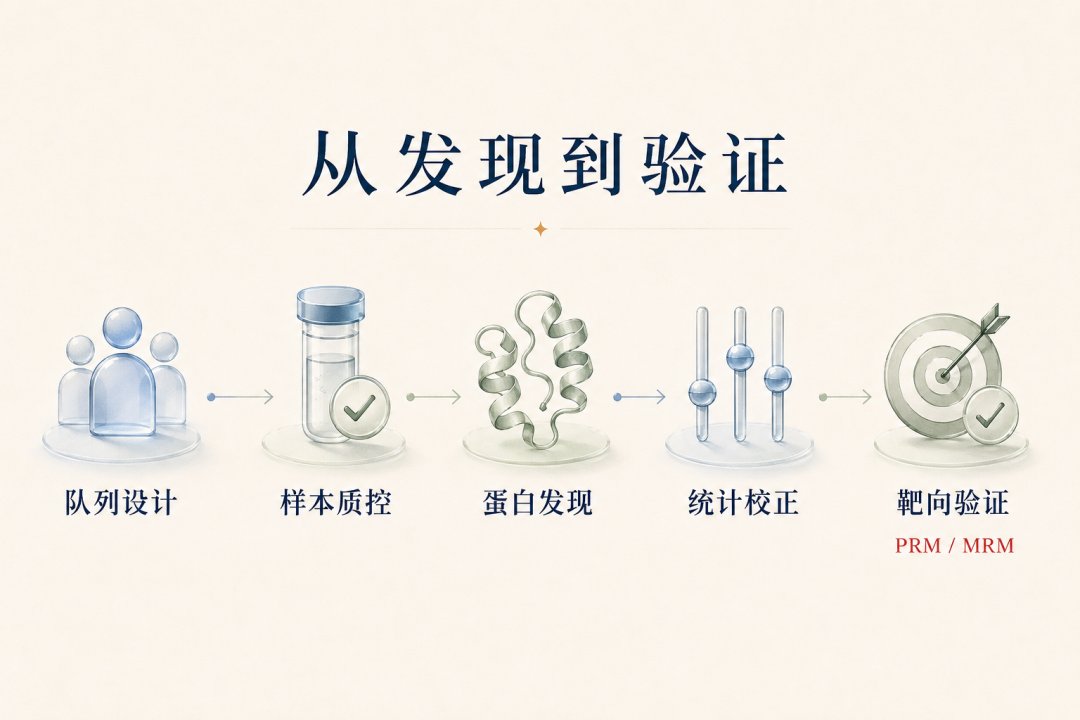
Step one is to place cohort design before testing. Age stratification, sex ratio, BMI distribution, pubertal status, medication, and comorbidities should all be considered at the recruitment stage, rather than patched up after the results come out.
Step two is to ensure consistency in sample preprocessing. Blood collection tubes, centrifuge time, storage duration, and freeze-thaw cycles can all change the body fluid protein profile. High-depth detection has interpretative value only when built on stable preprocessing.
Step three is to broaden the observation range at the discovery stage. Low-abundance proteins, tissue-leakage proteins, and immune-related proteins are often more easily masked by high-abundance plasma proteins; deeper coverage helps discover new candidate signals and pathways.
Step four is to place candidate results back into a real biological context for correction. Age, sex, BMI, genetic loci, and batch factors should enter the statistical model together with disease status.
Step five is to complete independent cohort and targeted validation. Discovery proteomics is responsible for "finding candidates," while targeted methods such as PRM and MRM are responsible for improving reproducibility and establishing quantitative methods; truly moving toward the clinic also requires prospective studies and compliance validation.
What kind of research support can ProteinT provide?
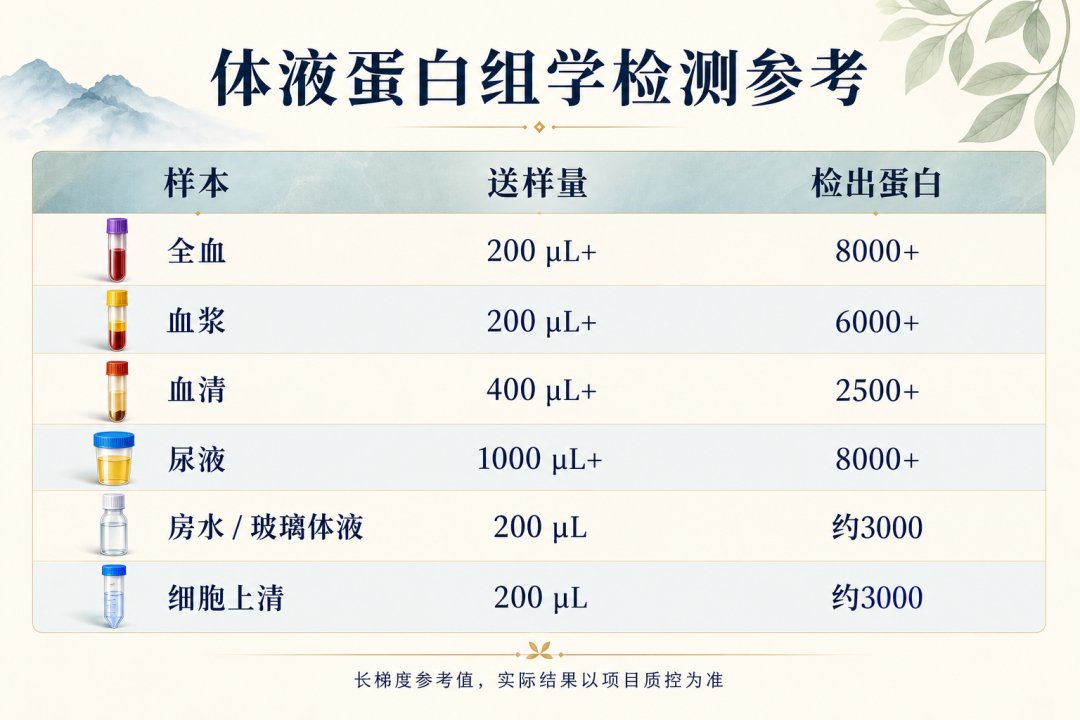
ProteinT has established a technical chain for body fluid low-abundance protein research, from sample preprocessing, mass spectrometry detection, quality control, and data analysis to targeted validation, and can be applied to various samples such as plasma, serum, whole blood, urine, aqueous humor, vitreous humor, and cell supernatant.
Under the specific sample input amounts and long-gradient detection conditions corresponding to existing technical materials, plasma above 200 μL can achieve 6000+ proteins detected, whole blood above 200 μL and urine above 1000 μL can achieve 8000+ proteins detected, serum above 400 μL can achieve 2500+ proteins detected; aqueous humor, vitreous humor, and cell supernatant can detect about 3000 proteins under corresponding conditions.
These figures represent platform capability under specific conditions, not a fixed commitment for every sample. Actual detection depth is affected by sample quality, preprocessing protocol, instrument method, gradient length, and project design, and should be based on the quality control results of the specific project.
For pediatric cohorts, obesity and metabolism research, or other biomarker projects, the value of high-depth detection is not just "detecting more," but providing a more complete data foundation for stratified modeling, candidate screening, and subsequent targeted validation.
Five common questions about the pediatric plasma proteome
Q1: Does the fact that 58% of proteins are associated with age, sex, or BMI mean these proteins cannot be disease markers?
No. It means that study design and statistical analysis must correct for these factors. After reasonable stratification and independent validation, these proteins may still have biomarker value.
Q2: The proteome predicts age with a mean error of about 1.2 years — can this be used to judge whether a child's development is normal?
Currently it cannot be used this way directly. The result comes from model testing in a specific study cohort and is a proof of concept at the population research level, not a diagnostic tool for which clinical reference intervals have been established.
Q3: Why do pQTLs affect biomarker research?
pQTLs cause people with different genotypes to naturally have different protein baselines. If the genetic composition of the case and control groups is imbalanced, genetic differences may be mistaken for disease differences.
Q4: What is the difference between mass spectrometry proteomics and affinity proteomics?
Mass spectrometry identifies and quantifies proteins through peptide mass and fragment information, offering strong molecular specificity and the ability to use multi-peptide information to identify quantitative artifacts caused by some variants; affinity platforms typically have higher throughput. Each has its applicable scenarios, and quality cannot be judged by detection numbers alone.
Q5: Can high-depth body fluid proteomics be used directly for clinical diagnosis?
No. Discovery proteomics is mainly used for candidate biomarker and mechanism research. Entering clinical diagnosis also requires standardized methods, defined thresholds, independent population validation, prospective clinical evaluation, and corresponding regulatory processes.
Closing thoughts
What this study truly changes is not the interpretation of any single protein, but the way we look at blood biomarkers.
Pediatric plasma proteins are not a static set of values. They simultaneously record growth and development, sex differences, body weight status, and genetic background. Only by first understanding these "normal changes" can abnormal signals caused by disease be more accurately identified.
For biomarker development, detecting deeply is only the starting point. Only by connecting cohort design, preprocessing, confounding factor correction, genetic information, independent validation, and targeted quantification into a complete path can a differential protein ultimately become a reproducible, interpretable, and translatable research result.
Scientific statement: This article is intended for life science popularization and research information exchange and does not constitute disease diagnosis, treatment advice, or individualized medical conclusions. The platform detection figures in the article are based on existing technical materials and specific experimental conditions, and actual results are subject to the project plan and quality control data.
References
1. Niu L, Stinson SE, Holm LA, et al. Plasma proteome variation and its genetic determinants in children and adolescents. Nature Genetics. 2025;57(3):635-646. DOI: 10.1038/s41588-025-02089-2.
2. Aguet F, Alasoo K, Li YI, et al. Molecular quantitative trait loci. Nature Reviews Methods Primers. 2023;3:4. DOI: 10.1038/s43586-022-00188-6.
ProteinT is a national high-tech enterprise focused on the field of precision medicine multi-omics. As the leading unit of the Tianjin Key Laboratory of Clinical Multi-Omics, it pioneered "gene + protein + metabolism" multi-omics research, and its independently developed proteomics liquid biopsy technology is at the international leading level. The core team members come from Yale University, the National Institutes of Health, the National Center for Protein Sciences, and other well-known research institutions at home and abroad.
The company's R&D pipeline covers common single cancers such as liver cancer, lung cancer, gastric cancer, esophageal cancer, colorectal cancer, and pancreatic cancer, as well as pan-cancer, and extends to major chronic diseases such as cardiovascular and cerebrovascular diseases, focusing on key research directions such as early screening and early diagnosis, recurrence monitoring, and medication guidance. The Umbrella™ clinical molecular database with core intellectual property contains 100,000+ clinical sample data.
ProteinT is committed to continuous technological innovation and clinical translation of cutting-edge achievements, promoting the development of precision medicine and exploring the infinite possibilities of human health.
